
How should a pulse jet baghouse dust collector be installed correctly? Foundation level, equipment sealing, duct connections, compressed air supply, filter bag protection, electrical wiring, and dust discharge all affect reliable operation. This guide covers the key installation checks before commissioning an industrial baghouse dust collector.
Correct installation is important for the reliable operation of a pulse jet baghouse dust collector. Improper foundation alignment, air leakage, incorrect duct connections, compressed air problems, or damage to filter bags during installation can affect airflow, filtration performance, and equipment service life.
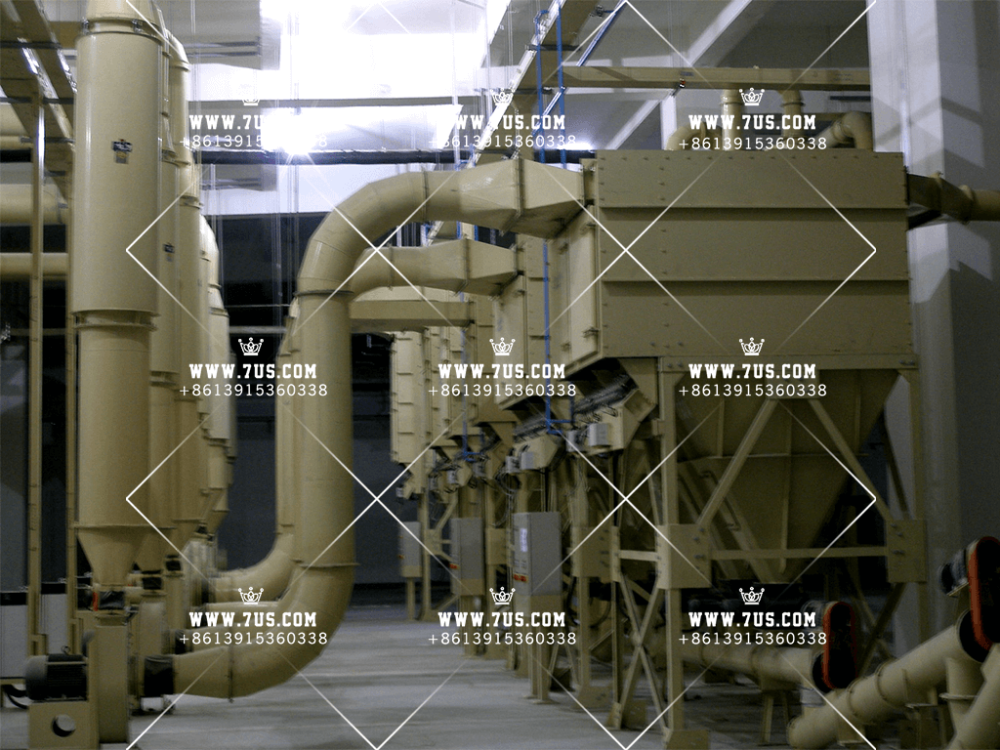
What Should Be Checked Before Installing a Baghouse Dust Collector?
Before installation begins, confirm the equipment drawings, foundation dimensions, inlet and outlet orientation, maintenance space, electrical specifications, compressed air requirements, dust discharge arrangement, and lifting conditions.
The installation should follow the equipment drawings and applicable local mechanical, electrical, structural, and safety requirements.
1. Check the Foundation and Equipment Level
The supporting foundation should be level, stable, and suitable for the equipment load. Anchor bolt positions should correspond with the dust collector structure and installation drawings.
Incorrect alignment can create unnecessary stress on the equipment structure and complicate duct, hopper, and discharge connections.
2. Make Sure the Dust Collector Is Properly Sealed
Air leakage can reduce dust collection performance and affect system airflow. Flanges, access doors, inspection openings, hopper connections, and other joints should therefore be properly sealed according to the equipment design.
Sealing materials should be suitable for the operating temperature and process conditions.
3. Protect Filter Bags During Installation
Filter bags are critical filtration components and should be protected from sharp edges, welding sparks, oil, water, and unnecessary mechanical contact during installation.
If welding or cutting work is required near the collector, suitable precautions should be taken to prevent sparks or hot particles from reaching installed filter bags.
Where practical, filter bags should be installed after nearby hot work has been completed and the equipment interior has been inspected and cleaned.
4. Check Filter Bag and Cage Installation
Filter bags and cages should be installed according to the specified arrangement. Incorrect seating, damaged seals, twisted bags, or improper cage installation can cause leakage, abrasion, or premature filter failure.
Each filter position should be checked before the dust collector is placed into operation.
5. Connect the Inlet and Outlet Ducts Correctly
Duct connections should match the dust collector inlet and outlet dimensions and should not place excessive mechanical loads on the collector housing.
Ductwork should be properly supported independently where required. Air leakage at duct connections should also be minimized.
6. Check the Pulse-Jet Compressed Air System
Pulse jet cleaning requires a stable supply of clean, dry compressed air. The air manifold, pulse valves, blow pipes, regulator, and related components should be checked before commissioning.
For many industrial pulse jet dust collectors, compressed air pressure is typically maintained at approximately 4 bar or above, depending on the equipment design and cleaning requirements.
Actual operating pressure should follow the specifications supplied for the particular dust collector.
7. Check the Hopper and Dust Discharge System
The hopper should be clear of installation debris before startup. Dust bins, rotary valves, screw conveyors, or other discharge components should be installed and checked according to the equipment configuration.
Collected dust should not be allowed to accumulate excessively inside the hopper because this can interfere with normal operation.
8. Check the Fan and Rotation Direction
Before continuous operation, verify the fan installation, mechanical condition, and motor rotation direction. Incorrect fan rotation can significantly reduce airflow and dust capture performance.
Electrical work should be performed by qualified personnel according to the equipment documentation and applicable electrical requirements.
9. Check Differential Pressure Monitoring
If the baghouse is equipped with a differential pressure gauge or sensor, confirm that the clean-side and dirty-side connections are correctly installed.
Differential pressure monitoring provides useful information about filter loading and can help evaluate filtration and pulse cleaning performance after startup.
10. Perform a Pre-Startup Inspection
Before startup, inspect the collector interior and exterior for tools, welding debris, loose components, packaging materials, or other foreign objects. Access doors and inspection panels should be closed and secured.
The compressed air system, fan, pulse cleaning controls, dust discharge components, electrical connections, and safety devices should be checked before normal operation begins.
What Should Be Checked During Initial Commissioning?
During initial operation, observe airflow, fan condition, differential pressure, pulse valve operation, compressed air pressure, dust discharge, equipment vibration, and any signs of air leakage.
Abnormal noise, vibration, pressure, or airflow should be investigated before the equipment is placed into continuous production.
Who Is Responsible for the Complete Dust Collection System Installation?
The dust collector is one component of the overall extraction system. Ductwork, capture hoods, electrical integration, fire or explosion protection, structural support, and other system components should be designed and installed according to the project requirements and applicable local regulations.
For international projects, 7US can provide equipment drawings, technical information, and equipment-specific installation guidance for the supplied dust collector. Overall system engineering and local compliance should be handled by the customer's qualified engineering or installation team.
Looking for a Pulse Jet Baghouse Dust Collector Manufacturer?
Jiangsu Erhuan Environmental Technology Co., Ltd. manufactures industrial dust collection equipment and filtration products under the 7US brand for international markets. Our product range includes pulse jet baghouse dust collectors, cartridge dust collectors, wet dust collectors, industrial filter bags, filter cartridges, and related filtration components.
We provide OEM and private-label manufacturing services for overseas distributors, engineering companies, system integrators, and equipment manufacturers.
If you are sourcing a baghouse dust collector, provide the required airflow, dust characteristics, operating temperature, moisture or oil content, electrical specifications, installation conditions, and required scope of supply for equipment evaluation.
View our industrial baghouse dust collection equipment and filtration products.
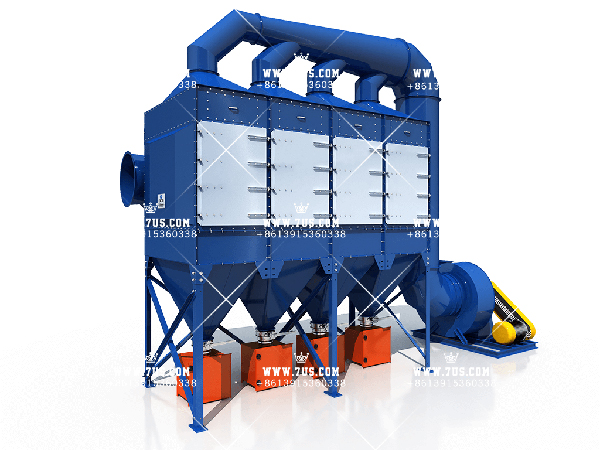
1. Vertical modular cartridge dust collector designed for high dust loading, fine dry dust and large-airflow industrial filtration applications. 2. Standardized DHC filtration modules can be combined to increase total airflow, allowing flexible system expansion according to project requirements. 3. Vertical cartridge arrangement with side-door access and eccentric cam fixing allows convenient filter inspection and replacement. 4. Single-stage cartridge filtration, two-stage cartridge + HEPA filtration, and three-stage cartridge + HEPA + activated carbon filtration configurations are available. 5. HEPA final filtration can be added for applications requiring very low particulate emissions, while activated carbon can be used as an additional polishing stage for suitable odor or VOC applications. 6. Standard single-module airflow ranges from 4,000 to 10,000 m³/h, and multiple DHC8 modules can be combined for systems up to 80,000 m³/h as shown on this page. 7. Equipment dimensions, filter media, color and OEM configuration can be customized according to project requirements.
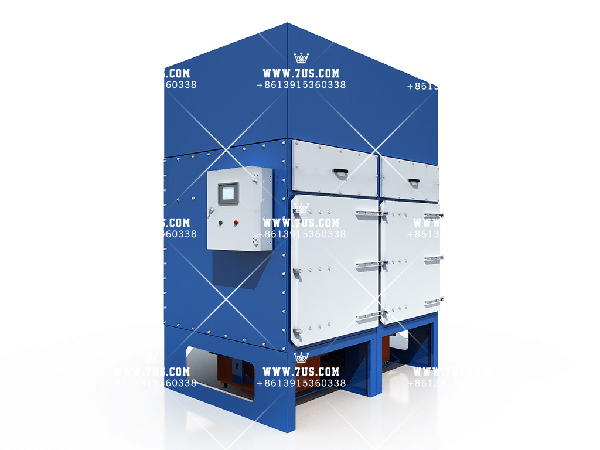
1. Vertical all-in-one cartridge dust collector designed for compact installation, convenient operation and efficient dry dust filtration. 2. Suitable for compatible dry dust and fume applications with dust-laden air temperatures below 120°C. 3. Vertical cartridge arrangement with side-door access allows convenient cartridge inspection and replacement. 4. Pleated cartridge filters provide a large filtration area within a compact equipment footprint, with automatic pulse-jet cleaning for routine filter cleaning. 5. Optional HEPA final filtration and activated carbon filtration can be added according to the required particulate and odor/VOC treatment needs. 6. DHC-YT series models are available with airflow capacities from 4,000 to 12,000 m³/h. 7. Equipment color, filter media, voltage, frequency and OEM configuration can be customized according to project requirements.
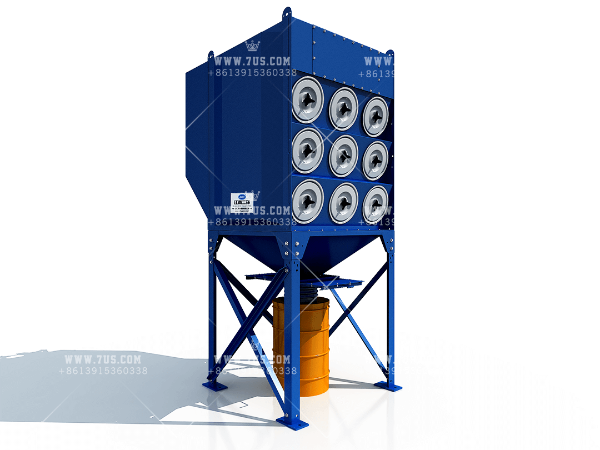
1. Downflow oblique modular cartridge dust collector designed for flexible capacity expansion through standardized modular units. 2. Compact modular construction helps reduce installation footprint and allows the equipment to be divided into transport-friendly sections for easier shipping and assembly. 3. Pleated cartridge filters provide a large filtration area within a compact equipment volume, with automatic pulse-jet cleaning for routine filter cleaning. 4. Standard EHDFT modules can be combined to increase total airflow according to project requirements, with configurations available up to 100,000 m³/h. 5. Optional two-stage filtration with cartridge filters and HEPA final filtration is available for applications requiring additional filtration performance. 6. Stainless steel construction, abrasion-resistant inlet arrangements, exhaust dampers and explosion protection components can be evaluated according to the application. 7. Suitable for compatible dry dust and fume applications without oil or water, subject to the confirmed dust characteristics and project safety requirements. 8. Equipment configuration, filter media, color a
No. 173, Wuwei Industrial Zone, Xushe Town, Yixing, Jiangsu, China© 1994-2026 7US.com. All rights reserved | Privacy PolicySite map
Phone