
All-in-One Cartridge Collectors
Compact configurations for individual laser cutting machines.
Capture laser cutting fumes with a dust and fume extraction system matched to your machine. From compact all-in-one units to modular cartridge collectors, we configure filtration and airflow around the cutting bed, material and operating conditions.
Effective capture starts at the machine: bottom extraction, zoned suction and—where needed—top extraction must work with the cutting bed design.
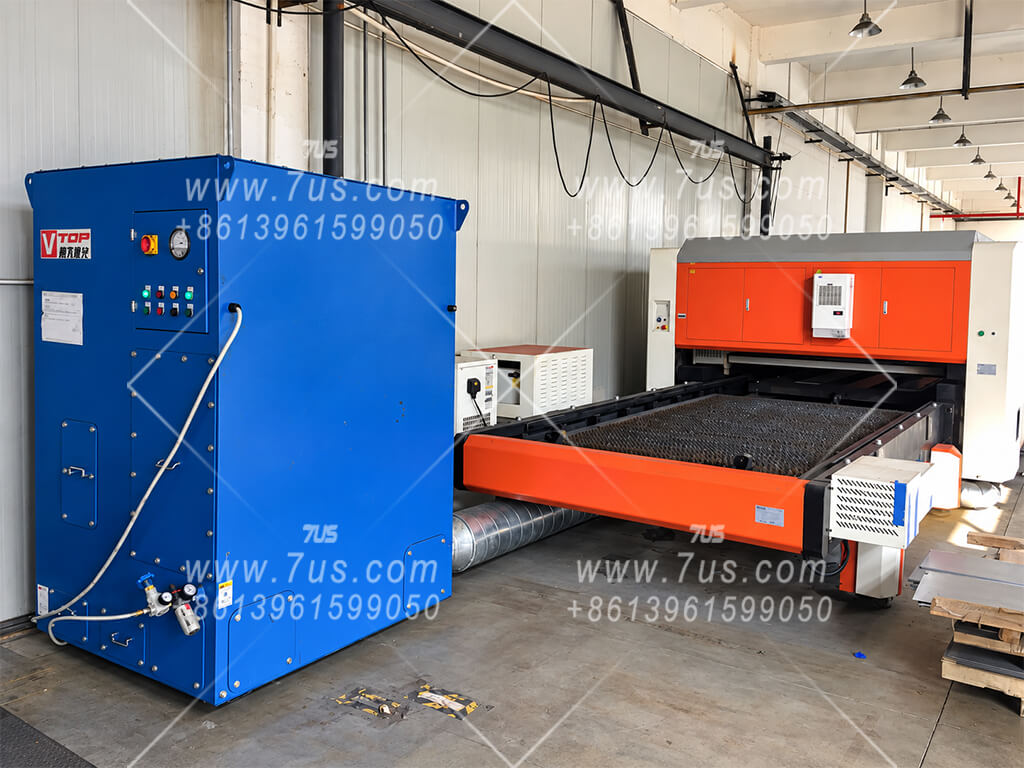
Examples of collectors supplied for laser cutting equipment. Final configuration depends on the machine’s extraction arrangement and the cutting process.
 Click to enlarge
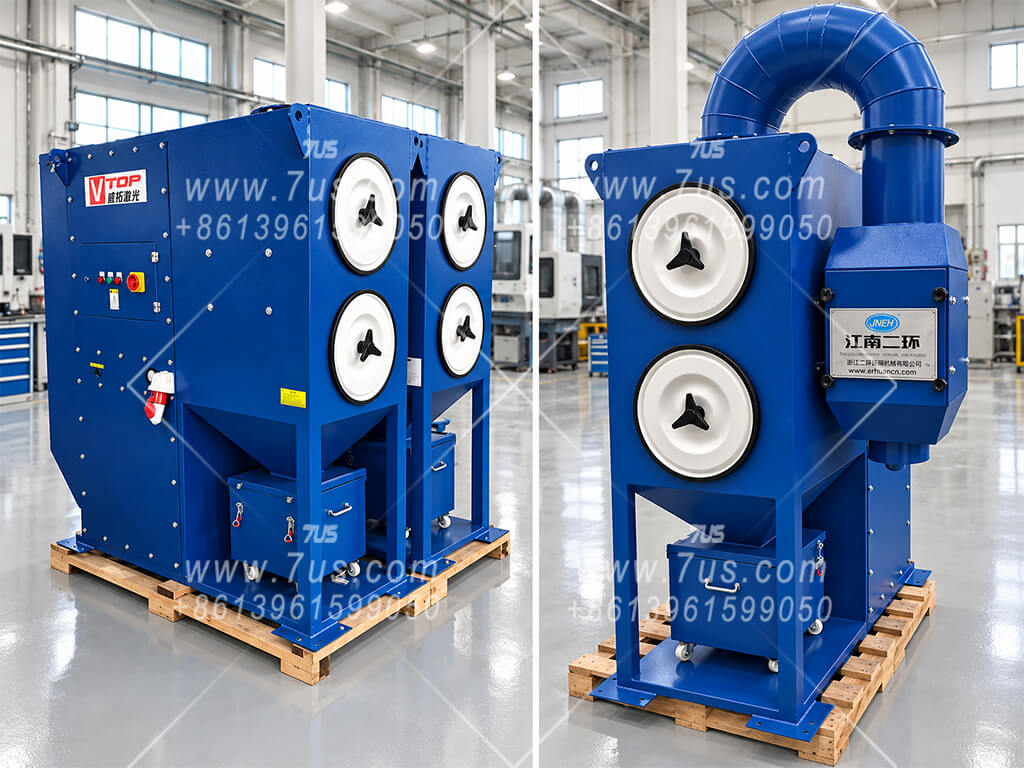
Compact all-in-one cartridge collector for laser cutting fume extraction.
 Click to enlarge
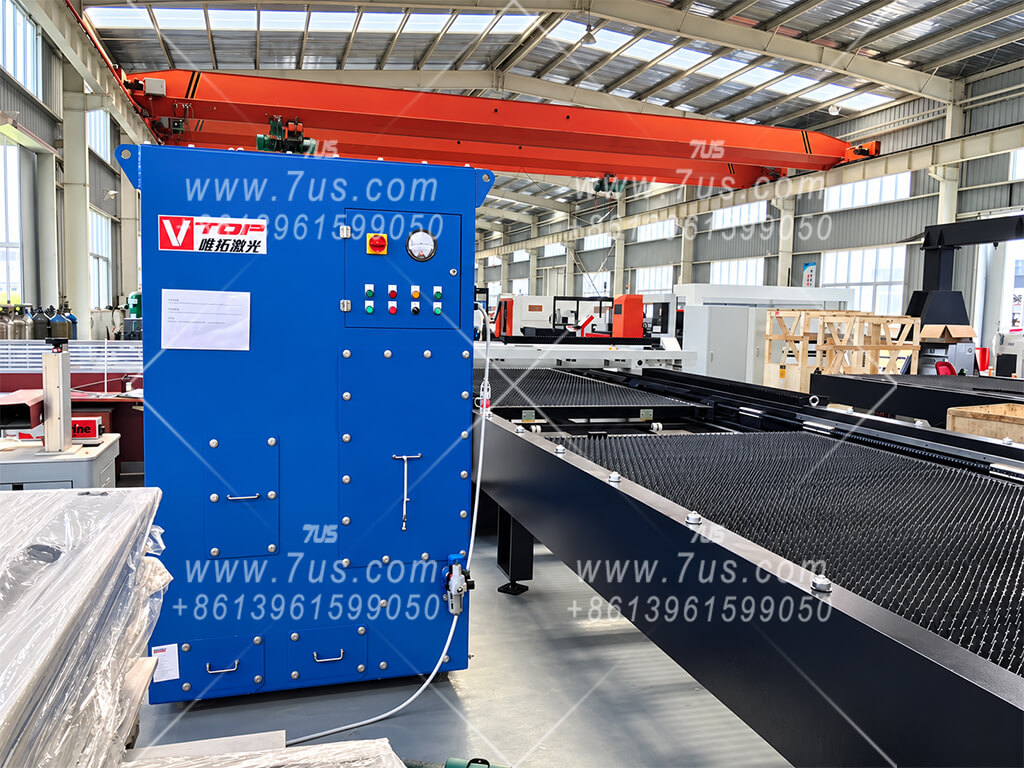
Cartridge dust collector paired with a VTOR laser cutting machine.
 Click to enlarge
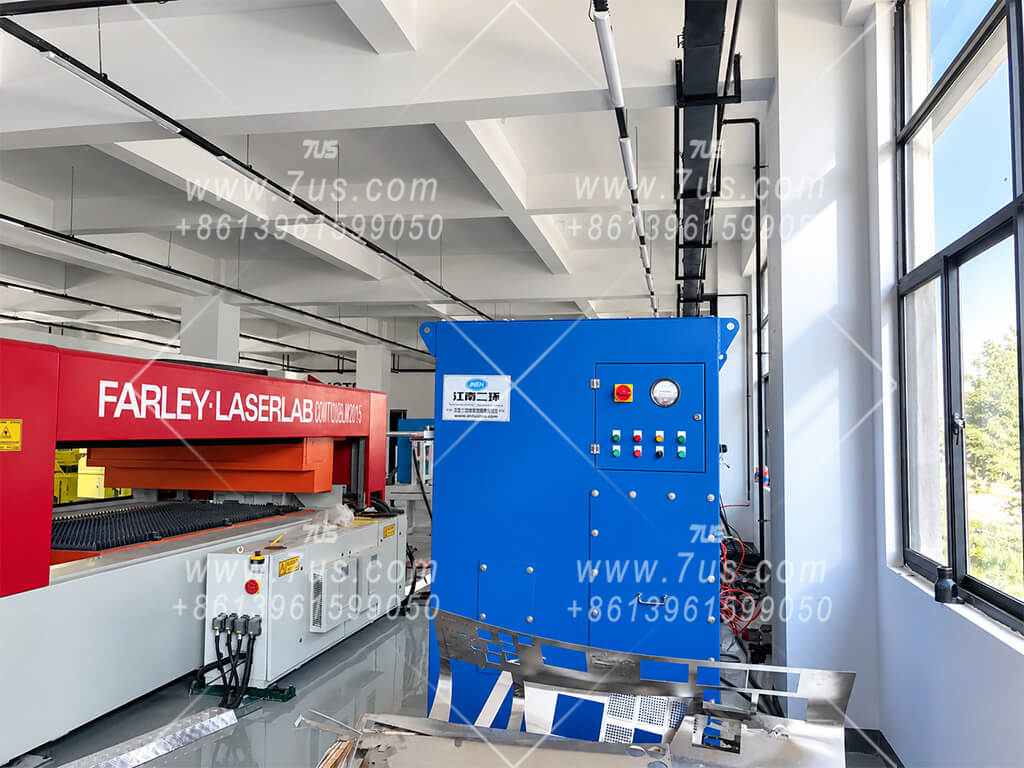
Application example with a Farley Laserlab laser cutting machine.
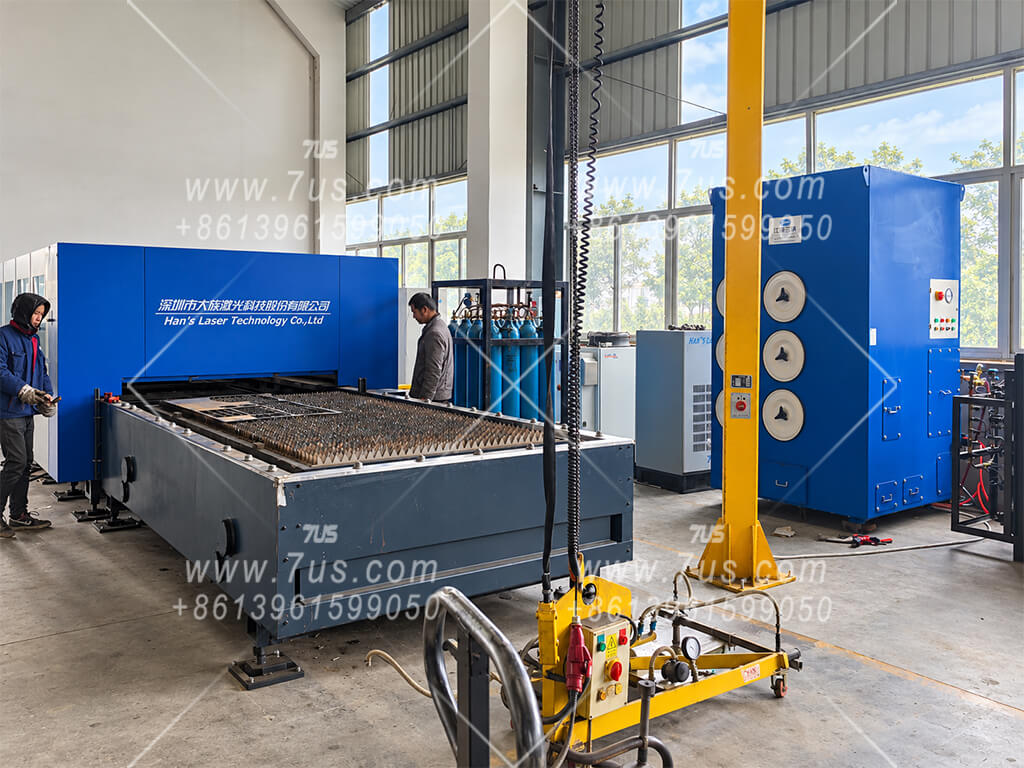 Click to enlarge
Application example with a Han’s Laser cutting machine.
Compact configurations for individual laser cutting machines.
For higher airflow or central extraction serving multiple laser cutting machines with compatible dusts.
For special cutting processes requiring a wet collection solution.
Start with the capture arrangement, then select the collector and fan to deliver the required airflow through the complete system.
Bottom extraction draws fumes through the cutting bed. Coarse sparks and hot particles usually fall into the bed, while some fumes can rise above it. If bottom capture is insufficient, assess bed zoning and a suitable upper hood without obstructing machine operation.
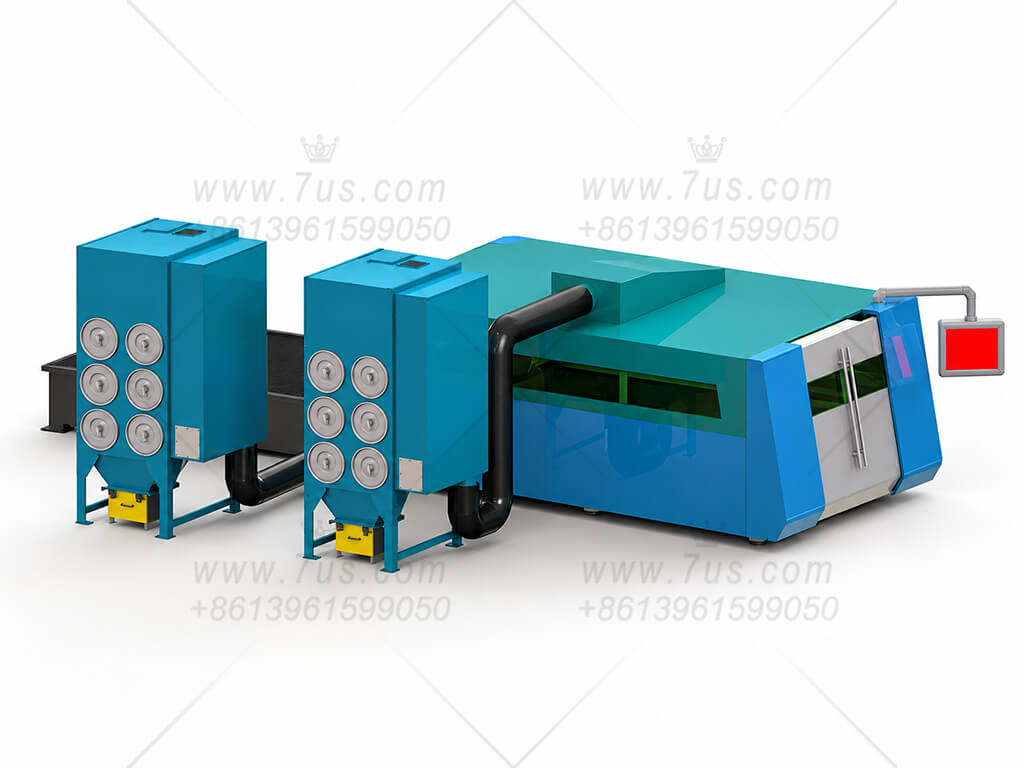
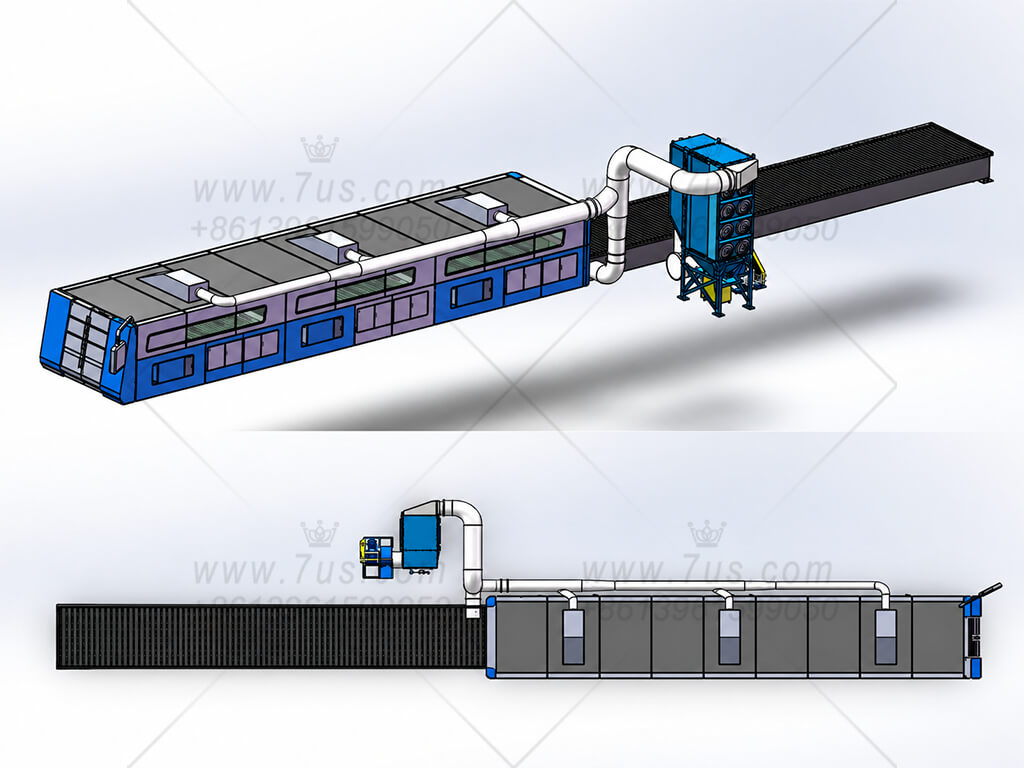
Bottom extraction can be supplemented by extraction from the upper enclosure where suitable connections are available. The enclosure helps contain rising fumes; the upper and lower branches must receive adequate airflow.
 Click to enlarge
Installation schematic. One EHI-6N serves the upper extraction and the other serves the cutting bed. Where process conditions allow, bottom extraction can operate alone at lower fume loads, with both collectors operating when upper capture is needed.
 Click to enlarge
Installation schematic. Upper and lower branches join a common main duct connected to one larger EHCDT4-16 collector. Branch balancing and total system resistance must be considered.
Use the table as a starting point. Material, thickness, bed design, cutting duty and duct resistance determine the final selection.
| Model | Reference Airflow (m³/h) | Fan Motor (kW) | Cartridges | Spark Arrestor | Dust Container |
|---|---|---|---|---|---|
| EHI-1 | 1,000 | 2.2 | 1 | External | External |
| EHI-2 | 2,000 | 3 | 2 | External | External |
| EHI-3 | 3,000 | 4 | 3 | External | External |
| EHI-4 | 4,000 | 5.5 | 4 | Integrated | Integrated |
| EHI-4N | 4,000 | 5.5 | 4 | External | External |
| EHI-6 | 5,500 | 7.5 | 6 | Integrated | Integrated |
| EHI-6N | 5,500 | 7.5 | 6 | External | External |
Common EHI configurations supplied by 7US. Motor ratings refer to the extraction fan, not laser power. Reference airflow is for preliminary selection; actual operating airflow depends on fan performance and total system resistance. “External” indicates a separate arrangement; confirm the supplied accessories in the quotation.
Record the diameter and number of extraction ports, the bed dimensions, damper operation and duct layout. Ports are normally provided by the laser machine manufacturer; laser power alone does not define the required collector size.
Duct airflow: Q = 3,600 × A × v, where Q is m³/h, A is m² and v is m/s. For illustration, at 15 m/s: Ø200 mm ≈ 1,700; Ø250 mm ≈ 2,650; Ø300 mm ≈ 3,820 m³/h. These are calculated duct flows, not capture guarantees or fixed port limits.
Higher airflow, heavier dust loads or extended operation may call for a modular collector with more filter area and a larger dust discharge arrangement. Select the fan for the required flow at operating resistance, including loaded filters.
Downflow Modular Collectors →Vertical Modular Collectors →Match protective measures and filtration stages to the actual process, rather than choosing solely by laser wattage.
Oil on sheet surfaces can produce sticky fumes that increase filter loading. A compatible conditioning powder, such as a suitable lime-based powder, talc or other compatible conditioning powder, may help adsorb oil and form a protective filter layer. Powder choice and feeding arrangement must suit the process.
See Pipeline Powder Feeders →7US laser cutting collectors are configured with flame-retardant filter media. Where hot particles reach the collector, an integrated or upstream spark arrestor can reduce carryover. Flame-retardant media and spark arrestors do not make a collector fireproof or provide complete explosion protection.
See Spark Arrestors →Assess the combustibility of the collected dust and the required fire and explosion protection for the installation. Grounding, suitable media, isolation and explosion relief may be needed. 7US can configure selected protective components; this does not constitute whole-collector ATEX certification.
For processes with persistent hot-particle problems, assess wet collection or a wet-plus-dry arrangement. Wet collection captures particles through contact with liquid; fine-particle performance depends on the scrubber design, not simply water solubility.
See Wet Dust Collectors →Thick aluminium, wood and leather cutting require individual assessment. Wet treatment can reduce some ignition risks but does not eliminate them; aluminium dust in contact with water also requires assessment of hydrogen generation. Gases and vapours may need treatment beyond particulate filtration.
Practical checks for a new installation or an extraction upgrade.
It may help if inadequate delivered airflow is the cause. First check the bed passages, port size, zoning, duct resistance and available capture points. Increasing collector size cannot compensate for every restriction or poor capture arrangement.
No. Balanced branches can share one collector sized for their combined duty. Two collectors allow independent control and can be useful where upper and lower extraction requirements differ.
This depends on the material, contaminants, filtration performance and applicable requirements. HEPA filtration may be considered for fine particles, but does not remove all gases or vapours. Confirm the discharge arrangement for the project.
Send the laser machine model and power, bed dimensions, materials and thicknesses, cutting duty, extraction port sizes and photos. Include the duct route, available electrical supply and any problems with smoke, oil or sparks.
A photo of the cutting bed and extraction ports helps us assess a suitable collector and connection arrangement.
Request a Configuration