EHWD-S · STANDALONE
Connected to the dust source
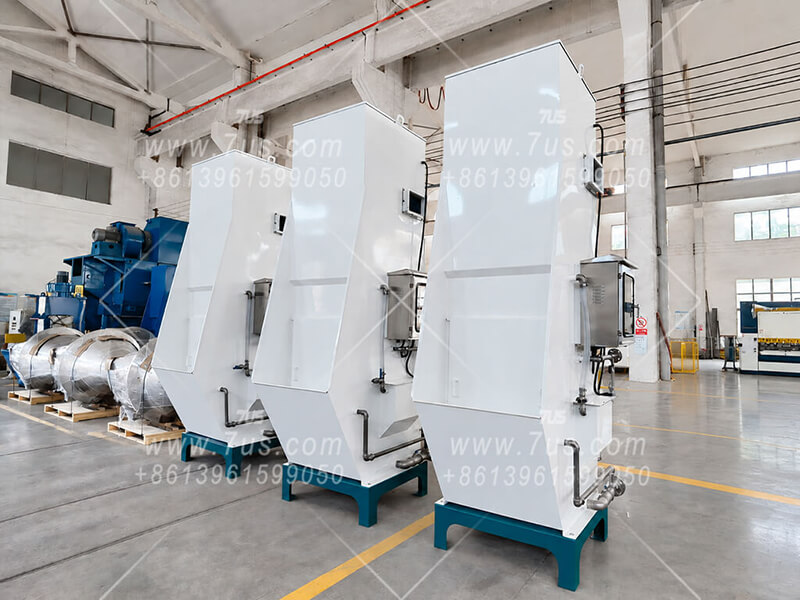
The standalone collector connects to a machine or capture point through ductwork. The compact body integrates the wet collection stage and extraction fan.
EHWD-S is a compact collector for connection to a dust source by ductwork and can also serve a separate grinding table. EHWD-V combines the grinding surface and wet collector in one workstation. Both use fan-driven airflow to create the wet scrubbing action without a separate scrubbing pump or spray nozzles.
* Combustible-metal applications require dust-specific assessment of water compatibility, water-level protection, hydrogen ventilation and sludge handling.
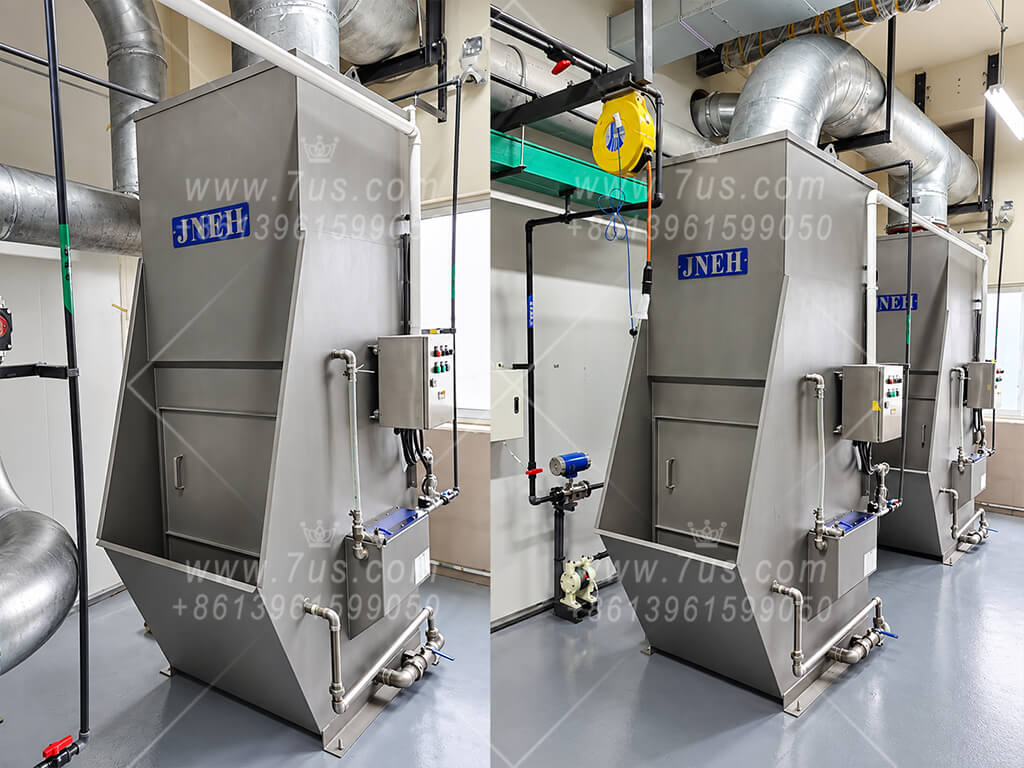
EHWD-S is a compact self-induced wet dust collector for connection to a dust source by ductwork. It can also serve a separate grinding table. EHWD-V brings the grinding table and wet collector together in one workstation. Other airflow capacities and grinding table sizes can be designed to suit specific applications.
The fan draws dust-laden air through the inlet and into the wet collection zone. Airflow raises a turbulent water wash that captures particles; entrained droplets are then separated before the air exits. No separate scrubbing pump or spray nozzles are required.
| Model | Airflow (m³/h) | Fan motor (kW) |
|---|---|---|
| EHWD-S2 | 1,700–2,500 | 3–4 |
| EHWD-S3 | 2,500–3,500 | 4–5.5 |
| EHWD-S4* | 3,500–5,000 | 5.5–7.5 |
| EHWD-S5* | 5,000–6,000 | 11 |
S2 and S3 are based on built units. *S4 and S5 are planned sizes; their airflow and motor values are preliminary estimates, subject to validation. Final selection depends on the project duty and system resistance.
EHWD-S · STANDALONE
The standalone collector connects to a machine or capture point through ductwork. The compact body integrates the wet collection stage and extraction fan.
EHWD-S · SEPARATE TABLE
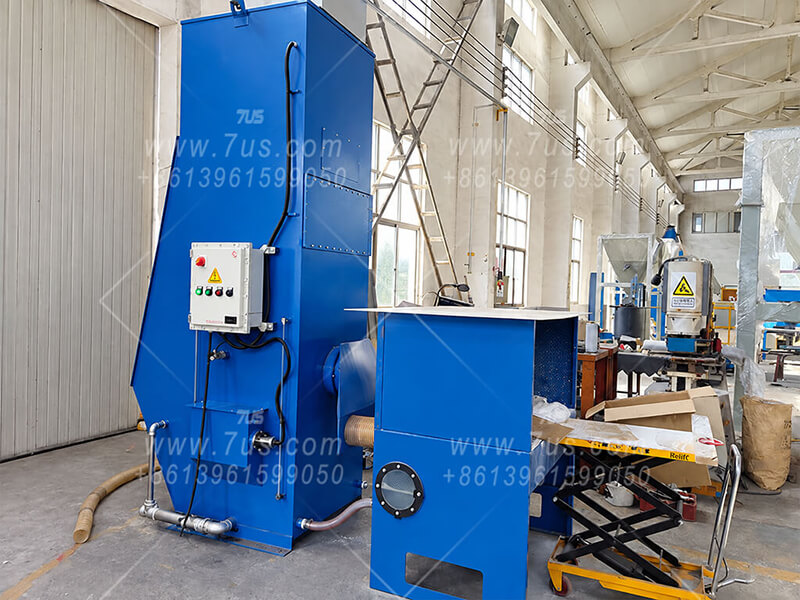
The grinding table and wet collector are separate pieces of equipment connected by ductwork. Their positions can be arranged around the available workspace.
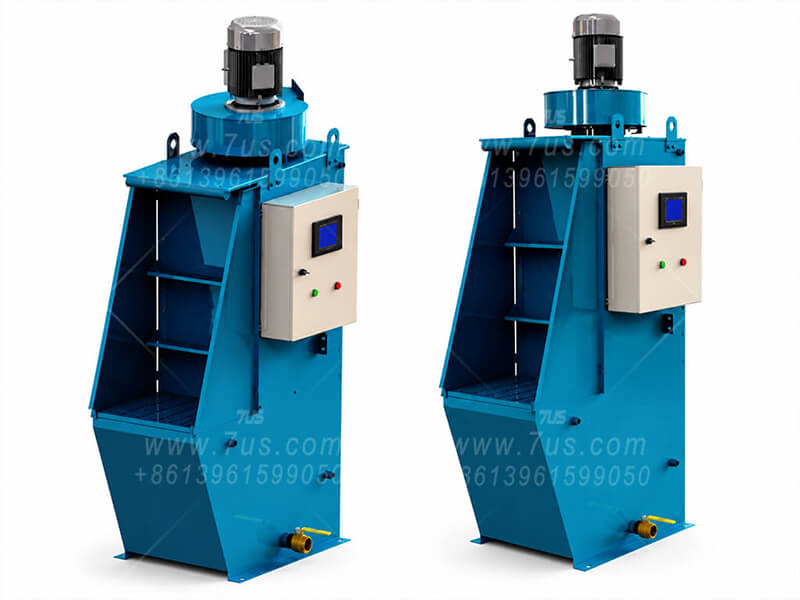
EHWD-V places the grinding surface directly in front of the wet collector. Dust is captured at the work area and carried into the self-induced water wash within the same equipment.
Three reference work surface sizes provide a starting point for selecting a workstation around the workpiece and available floor space.
| Model | Work surface (D × W, mm) | Airflow (m³/h) | Fan motor (kW) |
|---|---|---|---|
| EHWD-V2 | 600 × 600 | 2,000–3,000 | 4–5.5 |
| EHWD-V4 | 600 × 1,200 | 3,000–6,000 | 7.5–11 |
| EHWD-V6 | 600 × 1,800 | 6,000–9,000 | 15–18.5 |
EHWD-V is shown as a concept rendering. Listed sizes, airflow and motor power are preliminary design references; the final configuration is confirmed for each project.
EHWD-S and EHWD-V both use automatic make-up water. Low-water control functions and sludge-transfer options are selected to suit the project.
Both models use automatic make-up water. A solenoid valve opens to add water when the level-control system calls for it.
With float-switch control, a low water level signals the solenoid valve to add water. A PLC and touchscreen configuration can provide a low-water alarm and use the alarm signal to trigger shutdown. Alarm and shutdown functions are configured according to the customer's requirements.
Sludge is removed through the drain outlet, with manual assistance for material that does not discharge. This arrangement applies to both EHWD-S and EHWD-V.
Yes. An optional air-operated diaphragm pump can transfer sludge through pipework to a sludge pit. This pump is used for sludge removal. The fan-driven wet scrubbing action itself requires no separate scrubbing pump.
Share the dust type, required airflow, grinding-table needs, available power supply and preferred water-level and sludge-removal options. We can review an EHWD-S or EHWD-V configuration for your application.