
Vertical or horizontal cartridge dust collector: which design is better for your application? Filter orientation can affect dust shedding, pulse-jet cleaning, equipment footprint, filter access, and internal airflow. This guide compares vertical, horizontal, and inclined cartridge arrangements for industrial dust collection.
Cartridge dust collectors can use vertical, horizontal, or inclined filter cartridge arrangements. Although all of these designs use pleated filter cartridges to capture industrial dust, cartridge orientation can influence dust shedding, pulse-jet cleaning, equipment layout, maintenance access, and internal airflow.
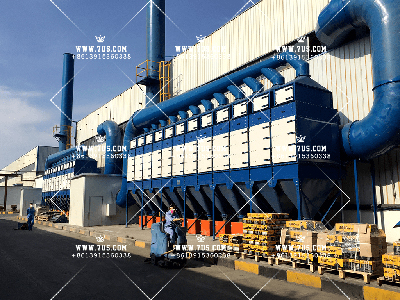
What Is a Vertical Cartridge Dust Collector?
In a vertical cartridge dust collector, the filter cartridges are installed vertically inside the collector. Pulse-jet compressed air is typically introduced from the clean-air side to remove accumulated dust from the filter surface.
When dust is released during cleaning, gravity can help the separated material move downward toward the hopper or dust collection section.
What Is a Horizontal Cartridge Dust Collector?
In a horizontal cartridge dust collector, the filter cartridges are installed horizontally and are often accessible from the side of the collector.
This arrangement can provide convenient side access and can be used in compact modular equipment designs. The actual configuration depends on the required airflow, cartridge dimensions, equipment structure, and maintenance requirements.
What Is an Inclined Cartridge Dust Collector?
An inclined cartridge dust collector installs the cartridges at an angle rather than completely horizontal or vertical. This configuration can combine side access with an inclined filter orientation according to the equipment design.
Inclined arrangements have been used in different industrial cartridge dust collector designs where equipment dimensions, filtration area, and service access need to be considered together.
Vertical vs Horizontal Cartridge Filters: What Are the Main Differences?
1. Dust Shedding During Pulse Cleaning
Filter orientation can influence where released dust travels during pulse-jet cleaning. With vertical cartridges, dust released from the filter surface can generally move downward toward the hopper with gravity.
In horizontal arrangements, dust released from an upper cartridge may interact with surfaces or filters below it depending on the internal configuration. Proper airflow and collector design are therefore important.
2. Equipment Footprint and Height
Vertical cartridge arrangements may require greater equipment height depending on cartridge length and maintenance access. Horizontal or inclined arrangements can allow different cabinet proportions and may be useful where installation height is restricted.
Equipment footprint should therefore be evaluated together with available installation height rather than assuming that one orientation is always more compact.
3. Filter Replacement and Maintenance Access
Horizontal and inclined cartridge designs commonly provide side access for filter replacement. Vertical cartridge collectors may use top, front, or other access arrangements depending on the equipment structure.
Maintenance space around the collector should be considered before equipment installation.
4. Filtration Area
Filtration area is determined primarily by cartridge dimensions, pleat construction, filter quantity, and filter media rather than cartridge orientation alone.
Therefore, it is not correct to assume that an inclined or horizontal dust collector automatically has a larger filtration area than a vertical collector. The actual filtration area must be calculated from the selected filter cartridges and quantity.
5. Pulse-Jet Cleaning
Vertical, horizontal, and inclined cartridge dust collectors can all use pulse-jet compressed air cleaning. Cleaning performance depends on pulse pressure, valve configuration, blow-pipe design, cartridge structure, dust characteristics, and the internal arrangement of the collector.
Cartridge orientation is one factor, but it is not the only factor determining cleaning performance.
Which Cartridge Orientation Has Better Dust Cleaning?
Vertical cartridge orientation can provide an advantage for dust shedding because released particulate matter can move downward with gravity. This can be particularly useful for suitable dry dust applications.
However, a well-designed horizontal or inclined cartridge collector can also provide effective filtration and pulse cleaning. The correct choice depends on the complete equipment design and application conditions.
Which Design Is Better for Fine Industrial Dust?
Fine dry dust can be collected by vertical, horizontal, or inclined cartridge dust collectors when the filtration area, filter media, airflow, cleaning system, and equipment configuration are correctly selected.
Dust type and operating conditions are generally more important than filter orientation alone.
What Cartridge Sizes Can Be Used?
Industrial cartridge dust collectors can use different filter dimensions according to the equipment design. 7US vertical cartridge dust collectors commonly use cartridges with a diameter of approximately 324 mm and lengths such as 660 mm, 1000 mm, 1200 mm, or 1500 mm depending on the required configuration.
Filter quantity and dimensions should be selected according to the required airflow, filtration area, dust characteristics, and operating conditions.
How Do You Choose Between Vertical and Horizontal Cartridge Dust Collectors?
Buyers should consider required airflow, dust characteristics, available floor space, installation height, filter replacement space, operating temperature, moisture or oil content, filter media, electrical requirements, and any applicable safety requirements.
Equipment selection should therefore be based on the complete application rather than choosing a collector only because its cartridges are vertical, horizontal, or inclined.
Where Are Cartridge Dust Collectors Commonly Used?
Cartridge dust collectors are widely used for suitable fine and dry particulate matter generated by grinding, polishing, welding-related processes, laser cutting, metalworking, powder handling, woodworking, and other industrial manufacturing operations.
Applications involving significant moisture, oil mist, sticky dust, or combustible materials require additional evaluation before conventional dry cartridge filtration is selected.
Looking for a Cartridge Dust Collector Manufacturer?
Jiangsu Erhuan Environmental Technology Co., Ltd. manufactures industrial dust collection equipment and filtration products under the 7US brand for international markets. Our product range includes vertical and other cartridge dust collectors, baghouse dust collectors, wet dust collectors, industrial filter cartridges, and related filtration components.
We provide OEM and private-label manufacturing services for overseas distributors, engineering companies, system integrators, and equipment manufacturers.
If you are selecting a cartridge dust collector, provide the required airflow, dust characteristics, operating conditions, available installation space, voltage and frequency, and required scope of supply for equipment evaluation.
View our vertical cartridge dust collectors for industrial dust collection applications.
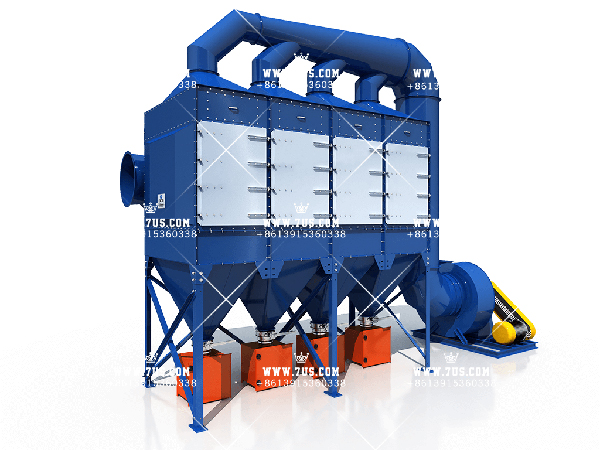
1. Vertical modular cartridge dust collector designed for high dust loading, fine dry dust and large-airflow industrial filtration applications. 2. Standardized DHC filtration modules can be combined to increase total airflow, allowing flexible system expansion according to project requirements. 3. Vertical cartridge arrangement with side-door access and eccentric cam fixing allows convenient filter inspection and replacement. 4. Single-stage cartridge filtration, two-stage cartridge + HEPA filtration, and three-stage cartridge + HEPA + activated carbon filtration configurations are available. 5. HEPA final filtration can be added for applications requiring very low particulate emissions, while activated carbon can be used as an additional polishing stage for suitable odor or VOC applications. 6. Standard single-module airflow ranges from 4,000 to 10,000 m³/h, and multiple DHC8 modules can be combined for systems up to 80,000 m³/h as shown on this page. 7. Equipment dimensions, filter media, color and OEM configuration can be customized according to project requirements.
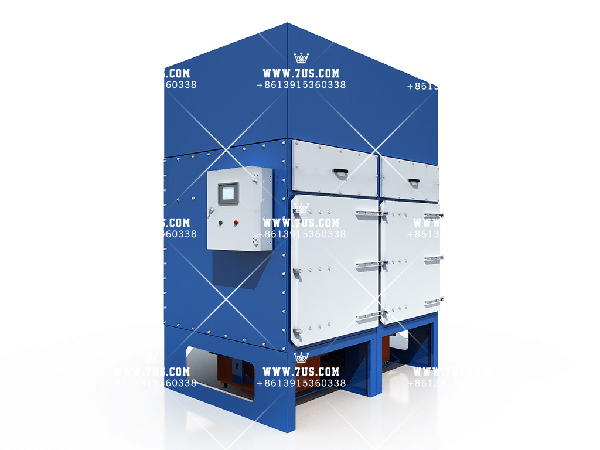
1. Vertical all-in-one cartridge dust collector designed for compact installation, convenient operation and efficient dry dust filtration. 2. Suitable for compatible dry dust and fume applications with dust-laden air temperatures below 120°C. 3. Vertical cartridge arrangement with side-door access allows convenient cartridge inspection and replacement. 4. Pleated cartridge filters provide a large filtration area within a compact equipment footprint, with automatic pulse-jet cleaning for routine filter cleaning. 5. Optional HEPA final filtration and activated carbon filtration can be added according to the required particulate and odor/VOC treatment needs. 6. DHC-YT series models are available with airflow capacities from 4,000 to 12,000 m³/h. 7. Equipment color, filter media, voltage, frequency and OEM configuration can be customized according to project requirements.
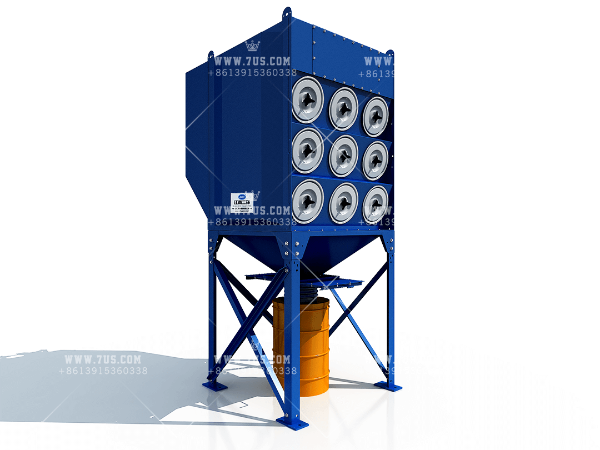
1. Downflow oblique modular cartridge dust collector designed for flexible capacity expansion through standardized modular units. 2. Compact modular construction helps reduce installation footprint and allows the equipment to be divided into transport-friendly sections for easier shipping and assembly. 3. Pleated cartridge filters provide a large filtration area within a compact equipment volume, with automatic pulse-jet cleaning for routine filter cleaning. 4. Standard EHDFT modules can be combined to increase total airflow according to project requirements, with configurations available up to 100,000 m³/h. 5. Optional two-stage filtration with cartridge filters and HEPA final filtration is available for applications requiring additional filtration performance. 6. Stainless steel construction, abrasion-resistant inlet arrangements, exhaust dampers and explosion protection components can be evaluated according to the application. 7. Suitable for compatible dry dust and fume applications without oil or water, subject to the confirmed dust characteristics and project safety requirements. 8. Equipment configuration, filter media, color a
No. 173, Wuwei Industrial Zone, Xushe Town, Yixing, Jiangsu, China© 1994-2026 7US.com. All rights reserved | Privacy PolicySite map
Phone