
Extraction Workbenches.
Built for your process.
Workbenches for grinding, welding and other processes requiring local dust or fume extraction. The benches connect by ductwork to a separate extraction system, with capture openings and filtration selected for the process. Multiple stations can share a central collector when their dusts or fumes are compatible.
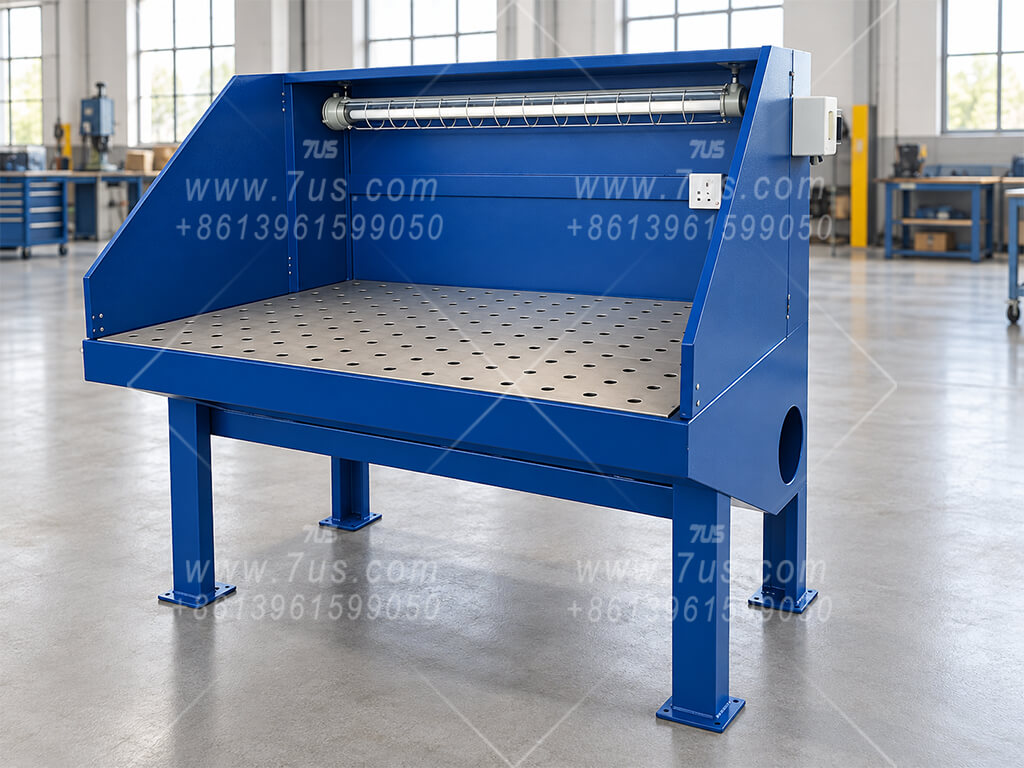
Dust and fume extraction workbenches
These workbenches have no built-in extraction fan or dust collector. Tabletop extraction, rear-panel extraction or local extraction arms can be specified for grinding, welding and other processes. The ductwork conveys captured dust or fumes to a separate collector selected for the material and process.
Ducted downdraft table
A perforated work surface and side panels surround the working area. The duct connection links the table to an external dust collection system.Electronics worktables
Custom extraction worktables for electronics manufacturing, with carbon steel frames and SS303 stainless steel worktops. Work surface dimensions and extraction connections are tailored to the production process.Glass-screen worktable
Glass screens can be incorporated around the work area. Panel arrangement, access openings and extraction positions are configured for the operation.Stainless steel worktable
An extended work surface with extraction openings in the tabletop and rear panel. Grade 304 or 316 stainless steel can be specified to suit the process.PVC extraction worktable
PVC worktable and plastic extraction ductwork, supported by a carbon steel frame. For handling acidic materials, including acid-soaked lead-acid battery plates.Glovebox-style grinding stations
Glovebox-style grinding stations with blast-resistant glass panels. The enclosure helps contain dust and flying particles, reducing operator exposure to airborne dust and shielding the eyes.Production-line workstations
Two-operator worktables with workers seated opposite each other, arranged alongside conveyors and handling equipment. Table spacing, working height and extraction connections are coordinated with the production line.Enclosed extraction workbench
A cabinet-style table with lighting, rear extraction openings and a perforated work surface. Service access and the internal arrangement are specified for each project.Central extraction installation
Several workbenches connect to a common extraction duct. Branch connections and system airflow are designed around the number of stations operating together.Separate table + wet collector
A separate worktable connects to an EHWD-S compact wet dust collector with its own extraction fan. The worktable and collector form a duct-connected system. Explore EHWD-S wet dust collectors →Configured for the job. Work surface length, depth and height, enclosure panels, material, extraction openings and duct connections are specified for each project. Carbon steel, grade 304 or 316 stainless steel and PVC work surfaces serve different requirements. Select materials and the extraction system to suit the actual dust and chemical conditions.
Central dust collection for multiple worktables
The ducted worktables in Section 01 are commonly arranged in production lines and connected to one central dust collection system. Modular or large-capacity collectors provide the higher airflow required by multiple workstations, with the fan and ductwork sized for the stations operating together.
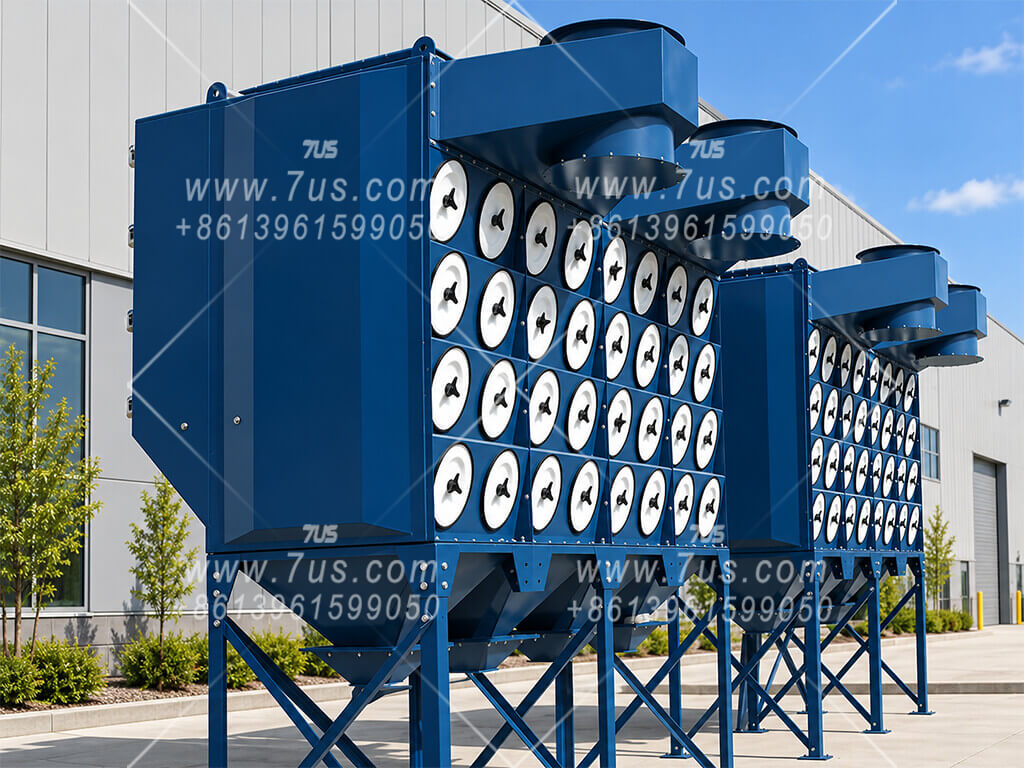
Modular cartridge dust collectors
Modular cartridge collectors provide shared extraction for multiple grinding worktables. Filter area and module combinations are selected for the total airflow and dust load.
Explore modular cartridge collectors →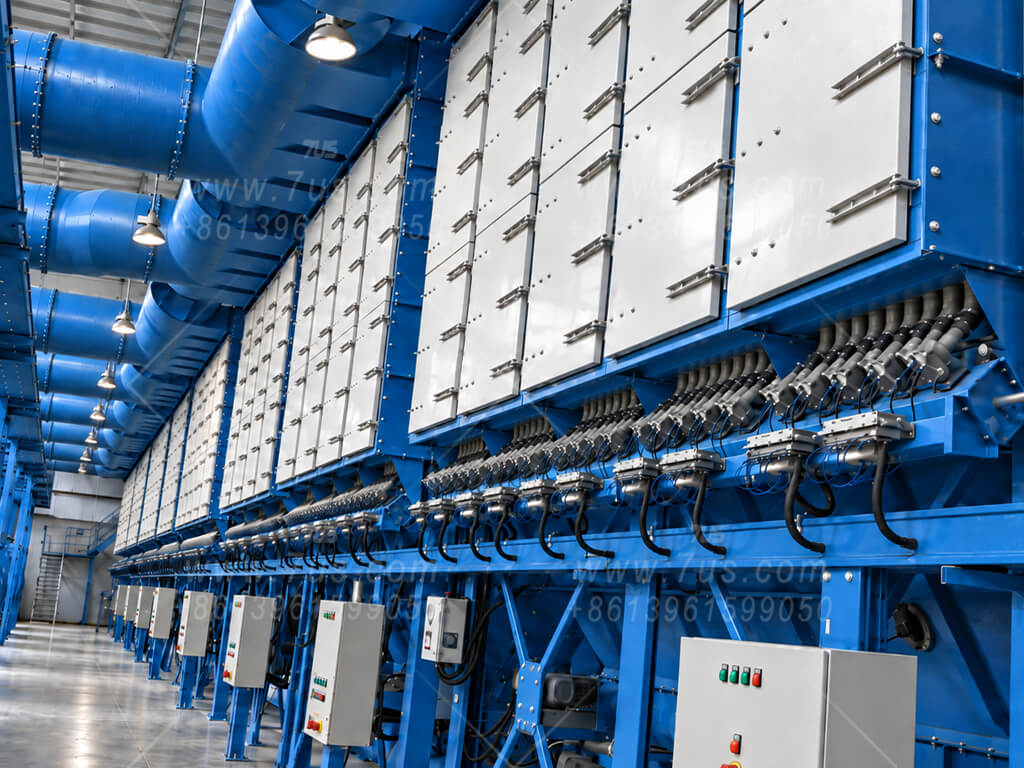
Modular baghouse dust collectors
Modular flat-bag collectors serve worktable rows and production lines through a common duct network. Filter media, filtration area and dust discharge are configured for the process.
Explore modular baghouse collectors →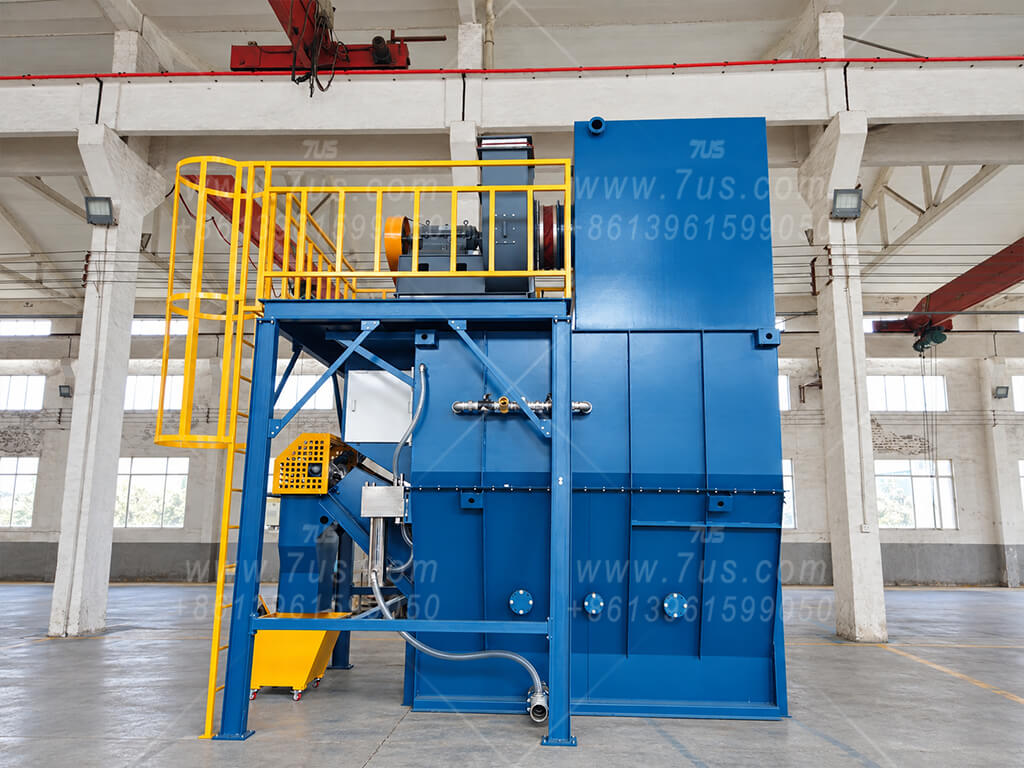
Large-capacity wet dust collectors
EHWD-B, C and D collectors provide wet dust collection for larger shared extraction systems. Capacity and sludge handling are selected for the dust and operating conditions.
Explore large-capacity wet collectors →Show us what you are working on.
These are selected examples of our custom worktables. Overall shape, length, depth, working height, materials and extraction arrangements can be tailored to your requirements. Send a workpiece photo or sketch and a short process description to discuss your project.
Contact Our Team- Workpiece material, size and process
- Preferred work surface length, depth and working height
- Number of operators and required access
- Existing dust collector, duct connections and available space
- Duct layout, connection sizes and stations operating together
- Work surface material, lighting, enclosure panels and other options