
All-in-One Cartridge Dust Collectors
Explore the detailed product pages for construction and available configurations.
Cartridge and wet dust collectors for shot blasting machines, with configurations also available for sandblasting cabinets and rooms. Selection depends on the workpiece, abrasive, dust load and extraction requirements.
Our shot blasting cartridge systems use a secondary HEPA filter for direct discharge into the workshop, where suitable. Integrated and separate fan arrangements are available for OEM equipment and retrofit projects.
 Click to enlarge
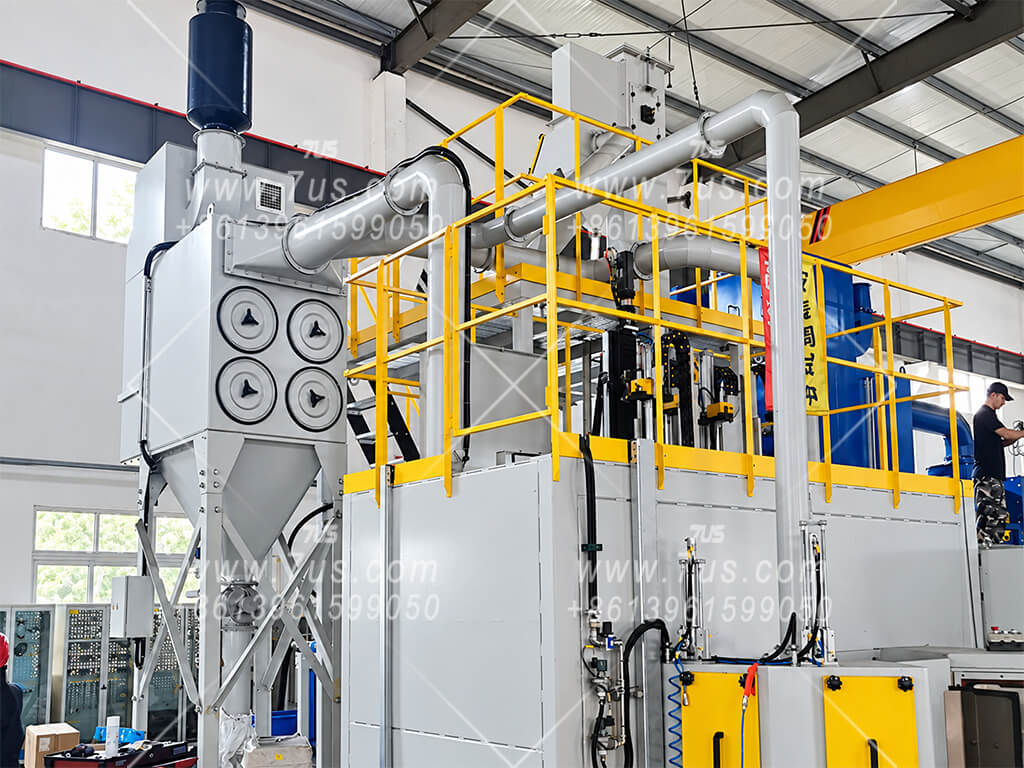
Downflow cartridge filtration with a top-mounted HEPA secondary stage for direct indoor discharge, where suitable. The two-stage system is connected to the shot blasting machine by short ductwork.
All photographs on this page show shot blasting installations. Downflow and vertical cartridge configurations are available; selection depends on the dust and machine layout.
 Click to enlarge
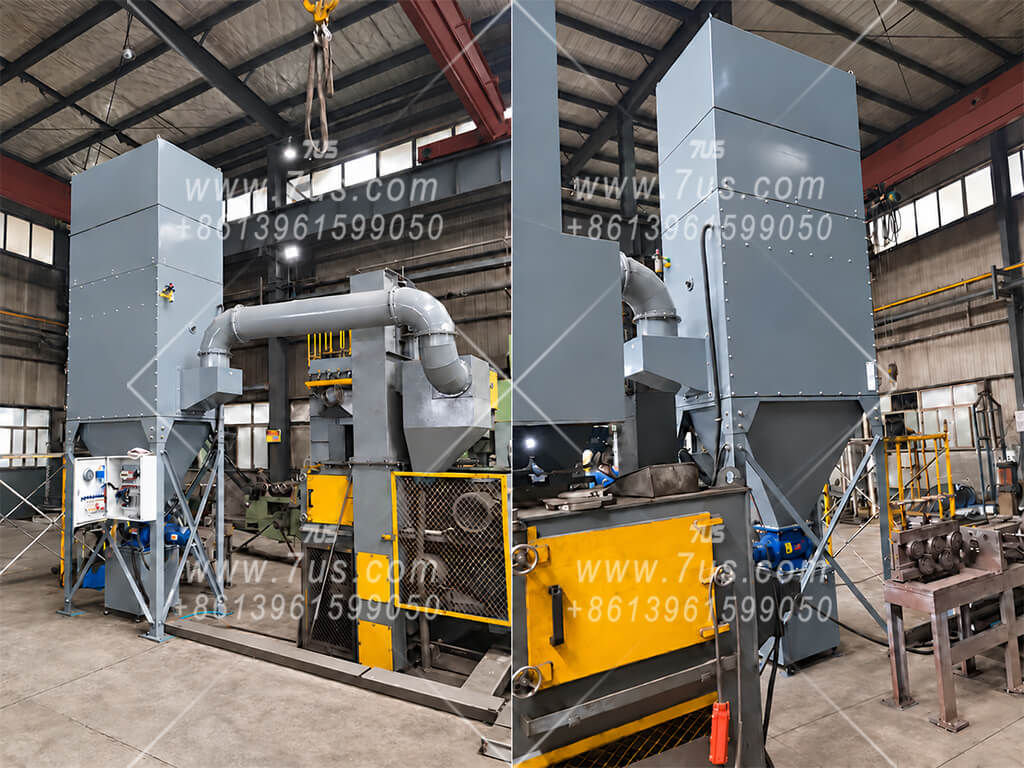
Two views of the same vertical cartridge all-in-one collector connected to a shot blasting machine. Cartridge filtration and a secondary HEPA stage provide two-stage filtration for indoor discharge, where suitable.
 Click to enlarge
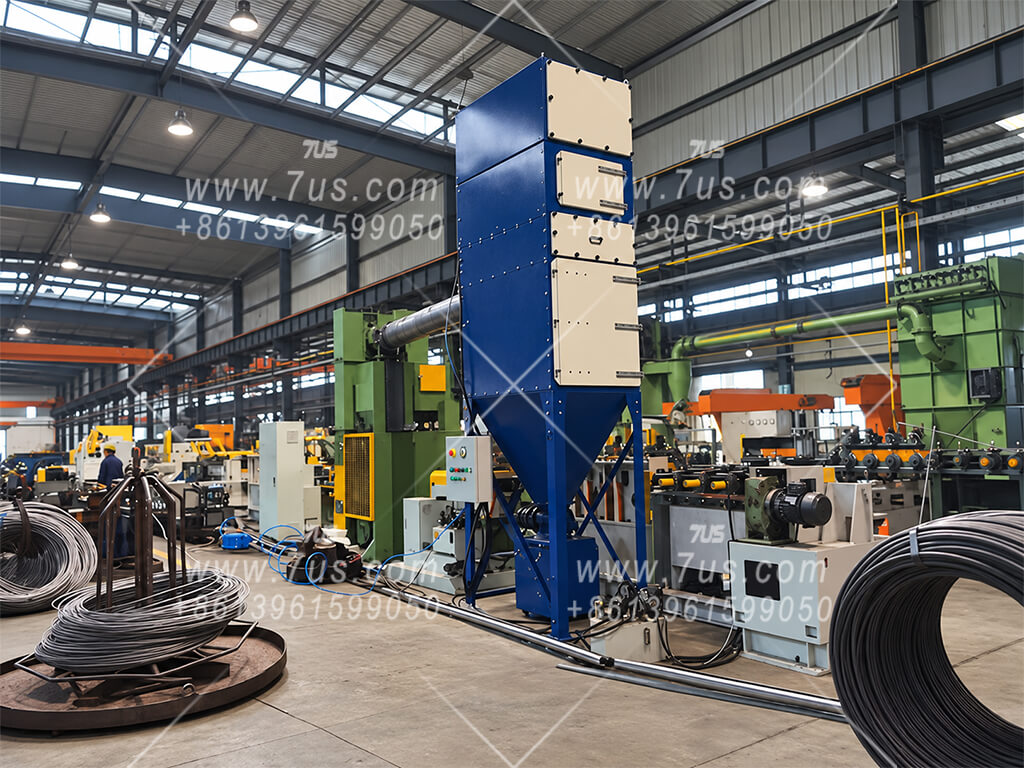
Vertical cartridge filtration and a secondary HEPA stage in a compact package for indoor discharge, subject to the application assessment.
 Click to enlarge
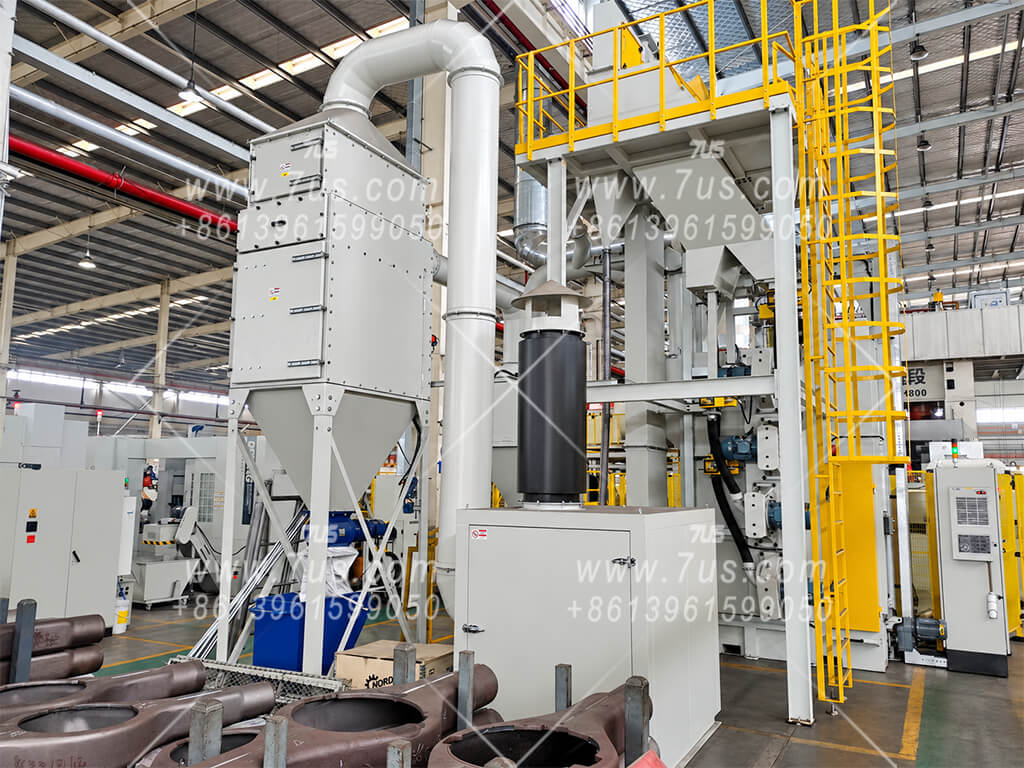
A vertical cartridge collector with secondary HEPA filtration. The separate fan is floor-mounted inside the acoustic enclosure.
 Click to enlarge
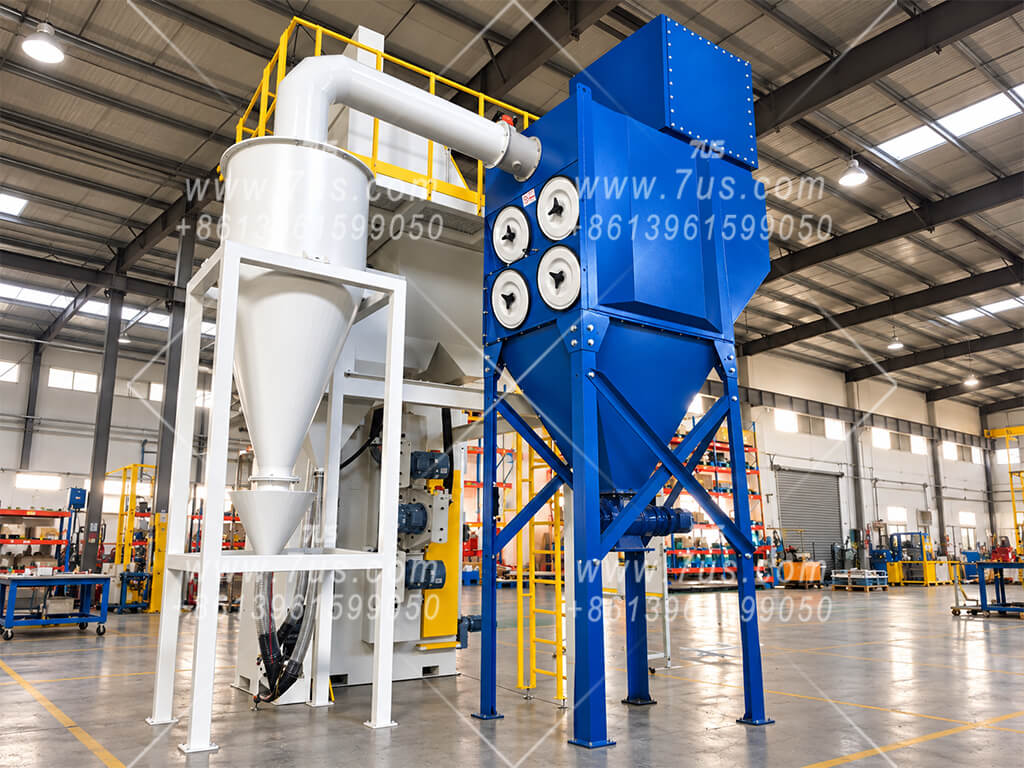
A downflow cartridge collector with secondary HEPA filtration, preceded by a cyclone separator. The fan is mounted on top of the acoustic enclosure, outside the enclosure.
Explore the detailed product pages for construction and available configurations.
For larger machines, heavier dust loads or several compatible extraction points, consider a modular collector with a separate fan and suitable dust discharge.
For suitable applications, filtered air leaves the fan and discharges directly into the workshop. It is not ducted as supply air to individual workstations.
An indoor discharge arrangement avoids an outdoor exhaust stack for the approved application and simplifies external ductwork. Integrated units suit compact layouts; a separate fan can be placed in an acoustic enclosure.
Monitor filter pressure drop, check cartridge and HEPA seals, and service the dust discharge. Pulse cleaning maintains the cartridges; the HEPA stage is replaced when required rather than pulse-cleaned.
Wet collection is an option for selected combustible metal dusts and processes where oily residues or ignition concerns make dry filtration difficult.
 Click to enlarge
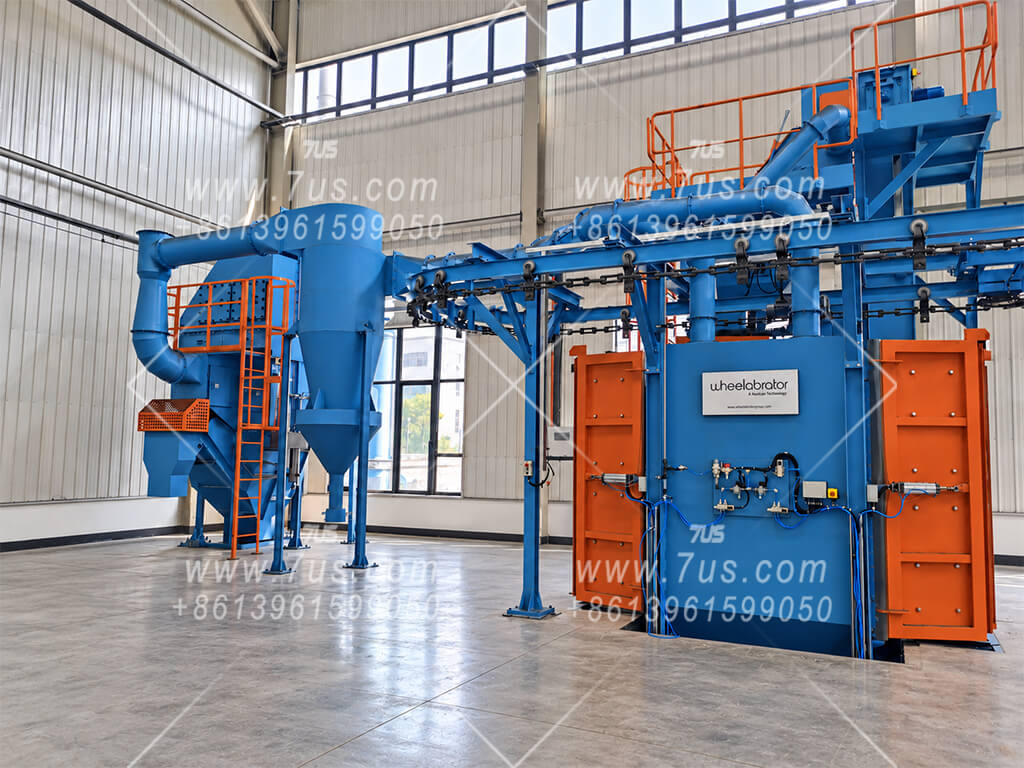
Shot blasting installation with a plate-chain sludge scraping mechanism to convey settled sludge out of the collection tank and reduce manual cleanout.
 Click to enlarge
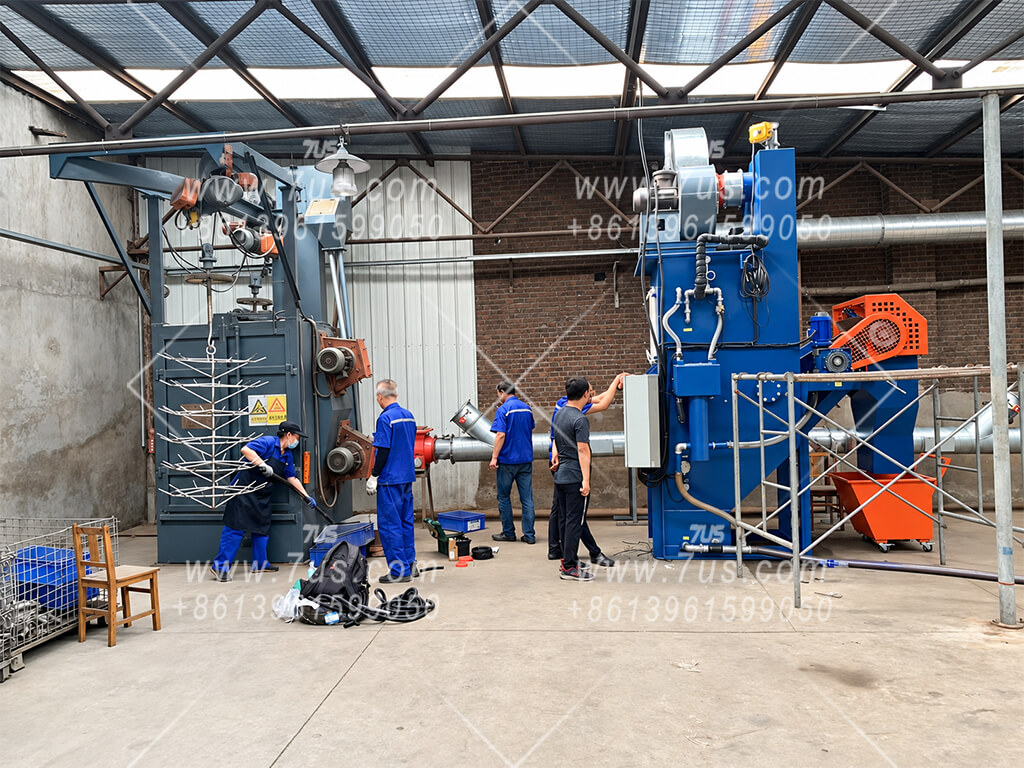
Commissioning of a wet dust collector for a customer processing aluminium workpieces by shot blasting.
For shot blasting aluminium, magnesium-alloy and titanium workpieces, we configure wet dust collectors to suit the metal dust. Our wet collectors for these applications include hydrogen vent valves to help prevent hydrogen accumulation, together with water-level controls and appropriate sludge removal.
Wet collection may be considered for shot blasting heavily oiled cold-rolled steel parts. Check oil loading, dust wettability and the required separation performance. Circulating water still needs maintenance, and sludge and wastewater need an appropriate disposal route.
See the detailed product pages for compact units and larger airflow systems.
Tell us the dust loading, daily operating hours and available maintenance access. We can assess tank layout and whether mechanical sludge removal is appropriate.
Airflow alone does not define the collector. Start with the blasting machine and dust characteristics, then select filtration, fan pressure and discharge arrangements.
| Application | Configuration to Assess | Key Checks |
|---|---|---|
| Dry dust; indoor discharge proposed | Cartridge collector + HEPA | Contaminants, filter seals, delivered airflow and verified discharge performance |
| Limited floor space; one machine | All-in-one cartridge package | Dust load, hopper capacity and maintenance access |
| Larger airflow or multiple machines | Modular cartridge collector + separate fan | Simultaneous demand, compatible dust streams, duct balancing and dust discharge |
| Combustible metal or heavily oily dust | Assess a dedicated wet system | Material reactivity, ignition sources, hydrogen, water controls and sludge handling |
| Sandblasting cabinet or blast room | Collector sized around the enclosure | Openings, nozzle duty, abrasive, visibility, clearance time and operator protection |
Use the machine maker’s extraction requirements where available. Check enclosure openings, leakage, duct resistance and dust clearance before doors open. Abrasive recovery and separation remain separate functions from ventilation dust collection.
These collector types can also serve sandblasting cabinets and rooms when selected for the process. Provide the enclosure dimensions, openings, nozzle count and abrasive type so we can assess airflow and dust loading. The photos above are shot blasting references; no sandblasting installation is pictured.
Technical reference: OSHA abrasive blasting ventilation guidance. Requirements depend on the installation location and process.
Practical points for OEM packages and dust collection upgrades.
No. In the arrangement described here, air passes through cartridge filtration and the HEPA stage, then the fan discharges it directly into the workshop. There is no dedicated supply-air duct to an operator workstation.
No. Suitability depends on the dust composition, actual filtration performance, system integrity and applicable workplace requirements. HEPA filtration does not remove all gases or vapours or replace fire and explosion controls.
Yes, where the dust streams are compatible and the system is designed for simultaneous demand. A modular collector, balanced branch ducts, a suitable fan and adequate dust discharge may be required.
Wet collection is an option for shot blasting combustible metal workpieces or heavily oiled parts. Our configurations for combustible metal dust include hydrogen vent valves, with water-level controls and sludge handling matched to the process.
The photographs on this page show shot blasting applications. Sandblasting cabinet and blast-room systems are selected separately according to their enclosure, abrasive and operating conditions.
Photos of the machine, extraction ports and installation area help us assess a suitable cartridge or wet collection package.
Request a Configuration