
 Click to enlarge
EHPF-180 · PULSE-OPERATED POWDER INJECTION
Precoat Powder Feeders
for Dust Collectors
Introduce selected dry powder into the dust collector inlet duct to help protect filter bags and cartridges from oily or sticky contaminants. The 180 L module uses compressed-air pulses, with adjustable injection timing and options for multiple units.
- 180 L standard hopper capacity
- Adjustable pulse duration and interval
- Multiple modules for higher powder demand
- Other capacities available on request
01
How Precoat Powder Injection Works
A pneumatic precoat powder feeder, also called a precoating dispenser or filter aid feeder, works with the dust collection airflow. Compressed air disperses the powder; the extraction fan provides suction for transfer to the inlet duct.
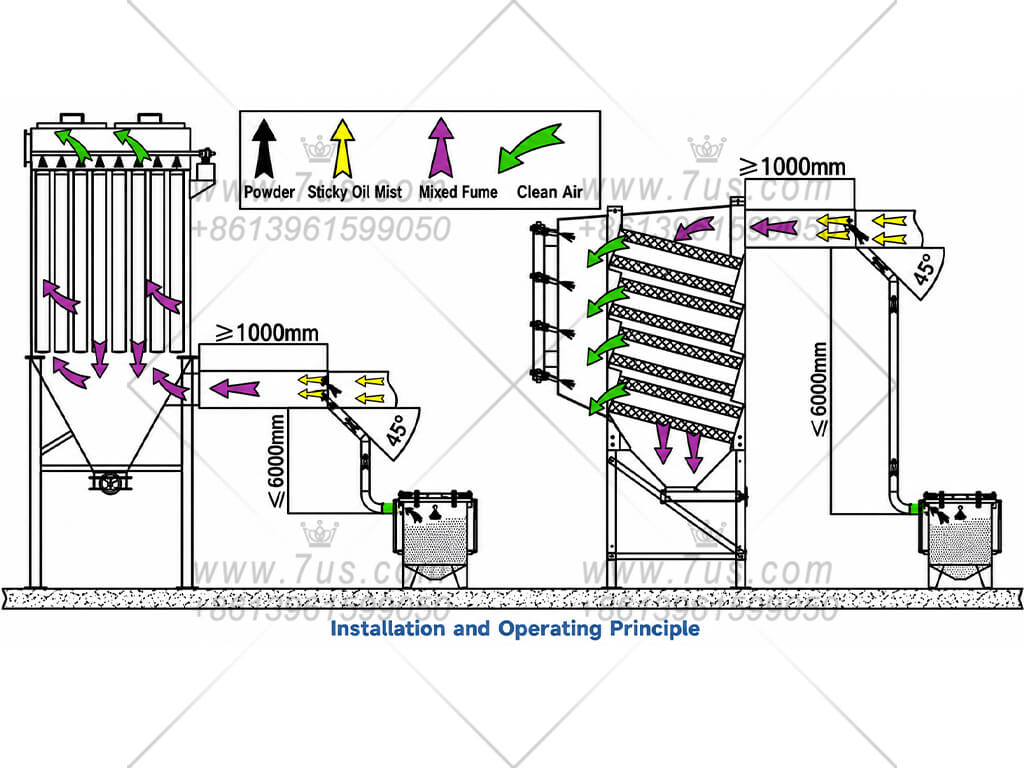
Click to enlargeInjection Upstream of the Collector
A pulse valve releases a short burst of compressed air to disperse powder inside the hopper. Suction from the extraction system carries the dispersed powder through the connecting pipe into the main inlet duct, where it mixes with the contaminated air before reaching the filter.
The illustration shows typical arrangements for vertical and inclined cartridge collectors. Connection position, pipe routing and conveying conditions are confirmed for each installation.
Filter Precoating & Periodic Powder Addition
A dust collector precoating system can apply a protective powder layer when suitable new filters are commissioned, and introduce additional powder periodically during operation.
Selected powder helps reduce direct adhesion of oily or sticky particulate to the filter media and supports the formation of a removable filter cake. Results depend on the powder, contaminant load and filter cleaning conditions.
- Initial precoating of suitable filter bags or cartridges
- Periodic powder injection during operation
- Application review for oily or moisture-laden dust
Dimensions shown in the installation illustration are reference guidance. Confirm the final layout for the actual duct system. Powder addition does not replace moisture control or a dedicated mist collection system.
02
180 L Modules & Adjustable Pulse Controls
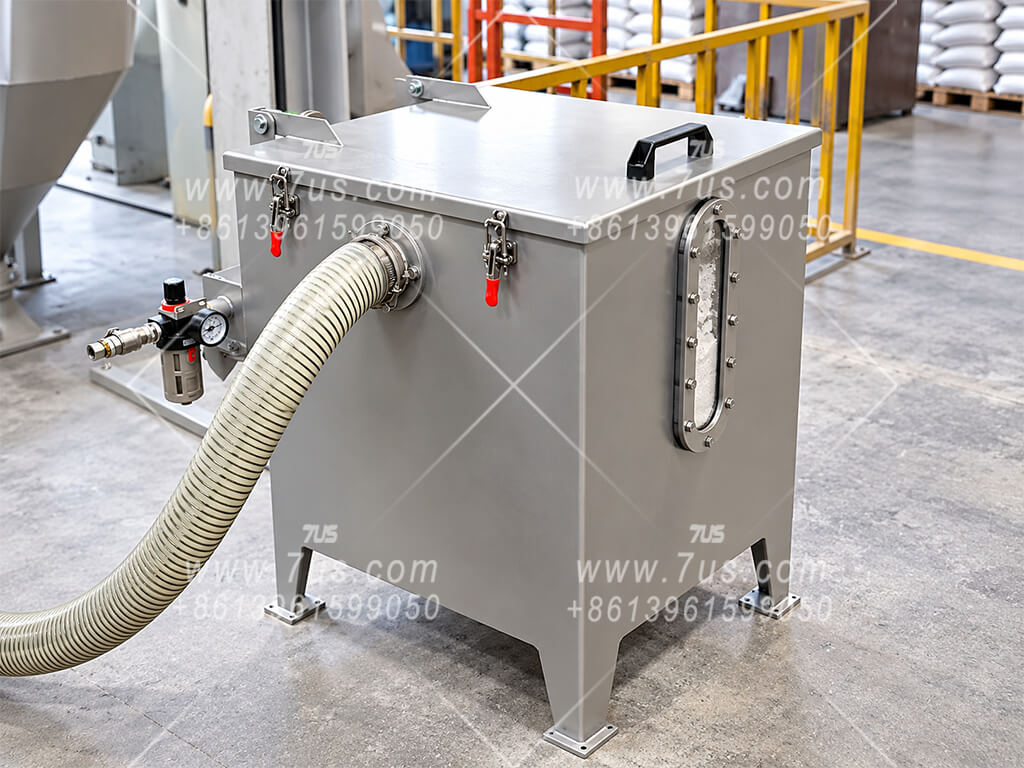
Use EHPF-180 to identify the standard 180 L model. Injection settings are tuned to the process and powder characteristics.
 Click to enlarge
EHPF-180: The Standard 180 L Module
Based on market demand and our experience supplying powder feeders, 180 L is the capacity most frequently selected by our customers. We therefore offer EHPF-180 as our standard model, with other capacities available on request.
Its modular format allows one unit to serve a suitable application, with additional units installed when more powder is needed.
Powder demand varies with the process, oil or moisture loading, operating hours and selected powder. Module quantity is selected from the actual requirement rather than airflow alone.
 Click to enlarge
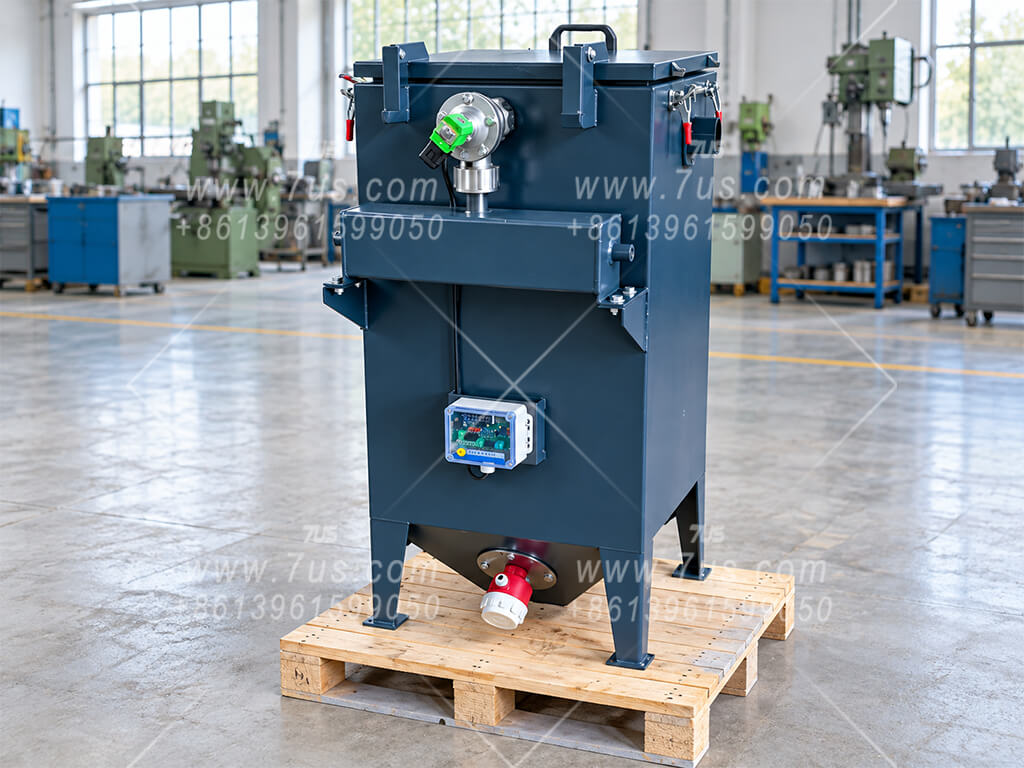
Air Reservoir, Pulse Valve & Controls
The rear view shows the compressed-air reservoir, pulse valve, level sensing component and pulse control box. The controller sets the valve opening duration and the interval between injections.
- Pulse duration: how long the valve remains open
- Pulse interval: the time between injections
- Settings adjusted during commissioning and operation
Component arrangement and controls are confirmed in the supplied equipment specification.
03
Operating Settings & Powder Handling
A practical setup combines adjustable injection timing with replenishment matched to the powder consumption.
Adjust the Injection Cycle
Start with settings suited to the selected powder and operating conditions, then adjust the pulse duration and interval based on observed powder consumption, filter condition and pressure-drop trends.
The required powder addition is established through application experience and site trials. There is no single consumption figure that applies to every dust or fume stream.
Add Modules as Demand Increases
If one feeder cannot supply enough powder under suitable operating conditions, a second or additional module can be configured.
First confirm that the powder is flowing freely and the connection is conveying correctly. Final module quantity and connection layout must account for duct suction, compressed-air availability and powder distribution.
Keep the powder dry and free-flowing, and use clean, dry compressed air. For moisture-sensitive powders, avoid filling more than can be consumed within a suitable period: prolonged storage can lead to caking and interrupted delivery. The 180 L rating is hopper volume, not powder weight or a required full charge.
04
Custom Capacities & Powder Selection
Select hopper capacity for the replenishment schedule, powder properties and space available—not simply for the largest possible stored quantity.
Other Capacities & Layouts
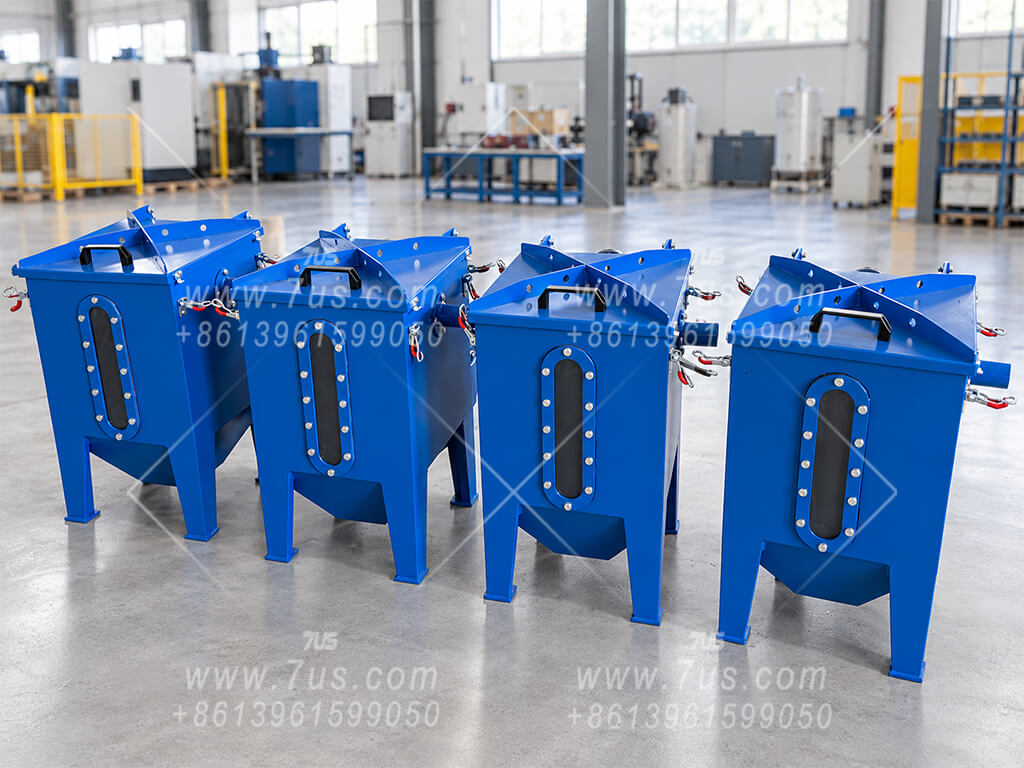
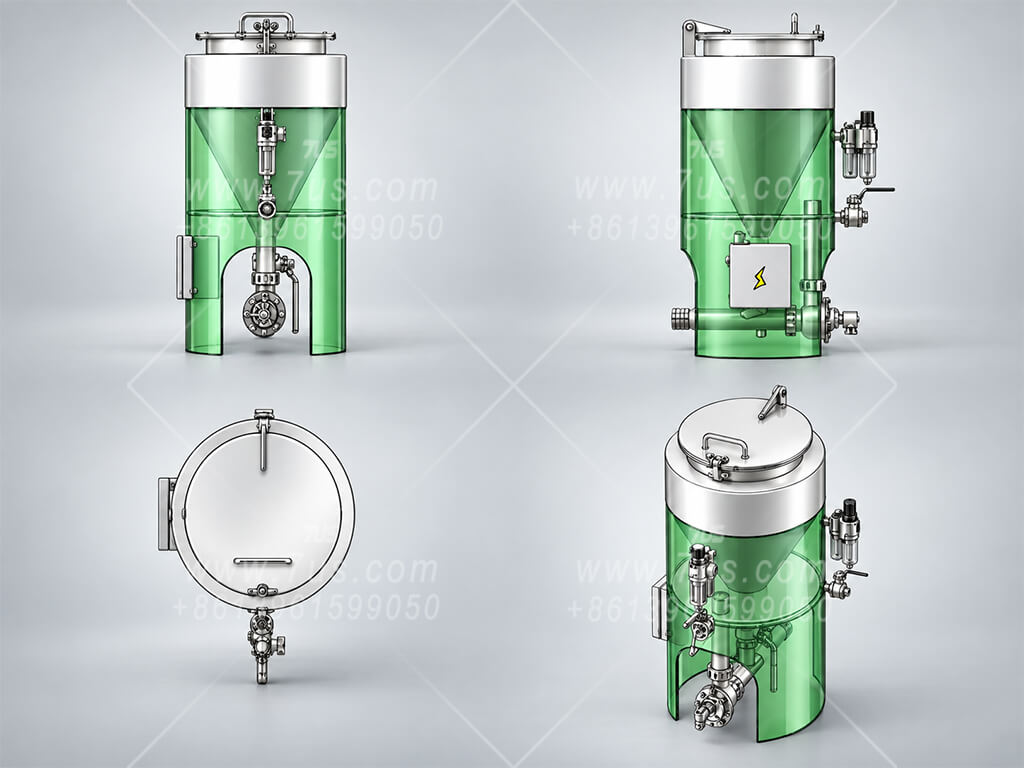
The range is not limited to 180 L. Other hopper capacities, cabinet shapes, connections and component layouts can be designed for the required powder demand and installation space.
This rendering illustrates an alternative design concept. The transparent shell is used to explain the internal hopper and does not specify the production material.
Select Powder for the Application
Potential materials include suitable lime-based powders, talc or specialist inert powders selected for the process. Powder flowability, moisture sensitivity and compatibility with the contaminants and filter media must be reviewed.
For combustible-dust applications, any inert powder and addition ratio require application-specific assessment and validation. The feeder itself is not an explosion suppression system.
Send the powder product information or safety data sheet with your inquiry so we can review the proposed material.
 Click to enlarge
05
Project Inquiry & Common Questions
Tell us about the existing or planned dust collection system. We will review the feeder capacity, connections and control requirements.
Information for a Quotation
- Process and dust or fume characteristics
- Oil or moisture content, if known
- Dust collector type and system airflow
- Main duct size, proposed connection point and layout
- Proposed powder type and operating hours
- Compressed-air supply, control power and available space
- Required quantity or preferred hopper capacity
Photos and a simple duct sketch are useful if detailed drawings are not available.
Common Questions
Can it be used with bags and cartridges?
Both can be considered where the powder and filter media are compatible with the application.
How much powder is required?
The amount depends on contaminant loading, humidity and powder properties. Settings are established through commissioning and operating observations.
Is 180 L the only capacity?
No. EHPF-180 is the standard module; other capacities can be customized.
Can several feeders be installed?
Yes. Additional modules can be configured after reviewing the powder requirement and conveying conditions.