
 Click to enlarge
CENTRAL SYSTEMS & MOBILE UNITS
Industrial Vacuum
Cleaning Systems
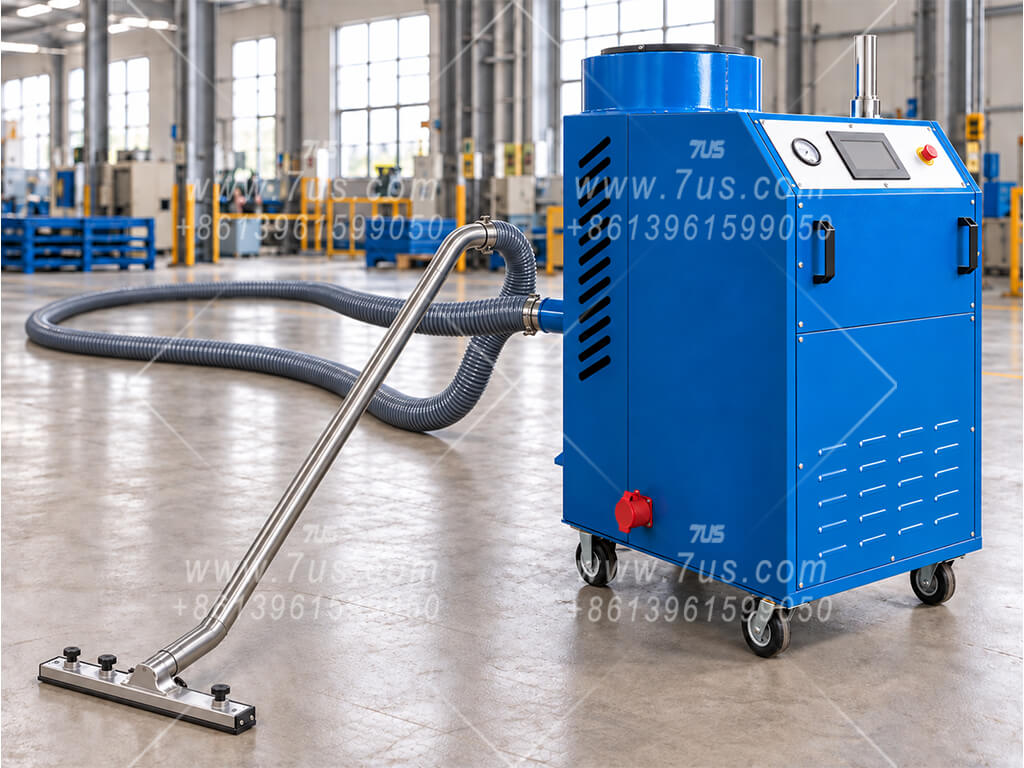
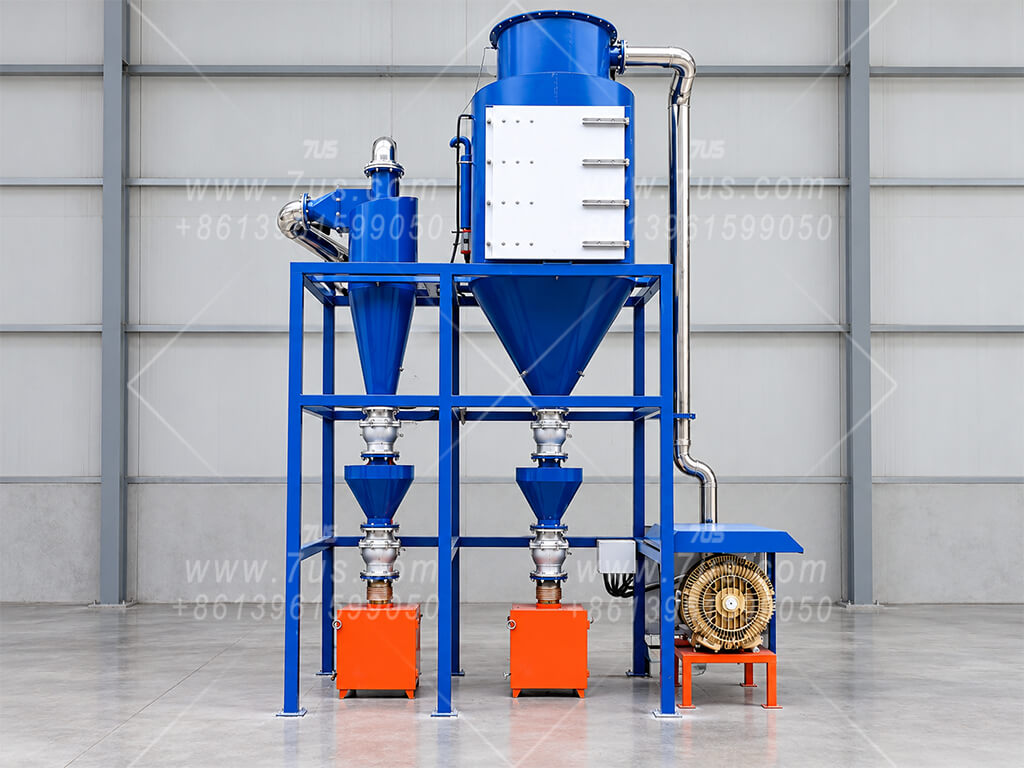
Collect settled dust and dry debris from floors, equipment and hard-to-reach areas. We manufacture the separation and filtration equipment and integrate selected vacuum blowers for central cleaning systems or mobile units.
- Cyclone pre-separation
- Cartridge or flat bag filtration
- Front access for filter maintenance
- Optional HEPA for blower protection
Central systems are configured around the dust properties, pipe layout and number of simultaneous users. HEPA final filtration can help reduce fine-dust deposits in the downstream blower.
01
EHVC-M500
Mobile Industrial Vacuum Cleaner
A compact, integrated unit for collecting settled dust and dry debris through a flexible suction hose. This mobile configuration is available in one specification: 500 m³/h airflow and −30 kPa vacuum.
Click to enlarge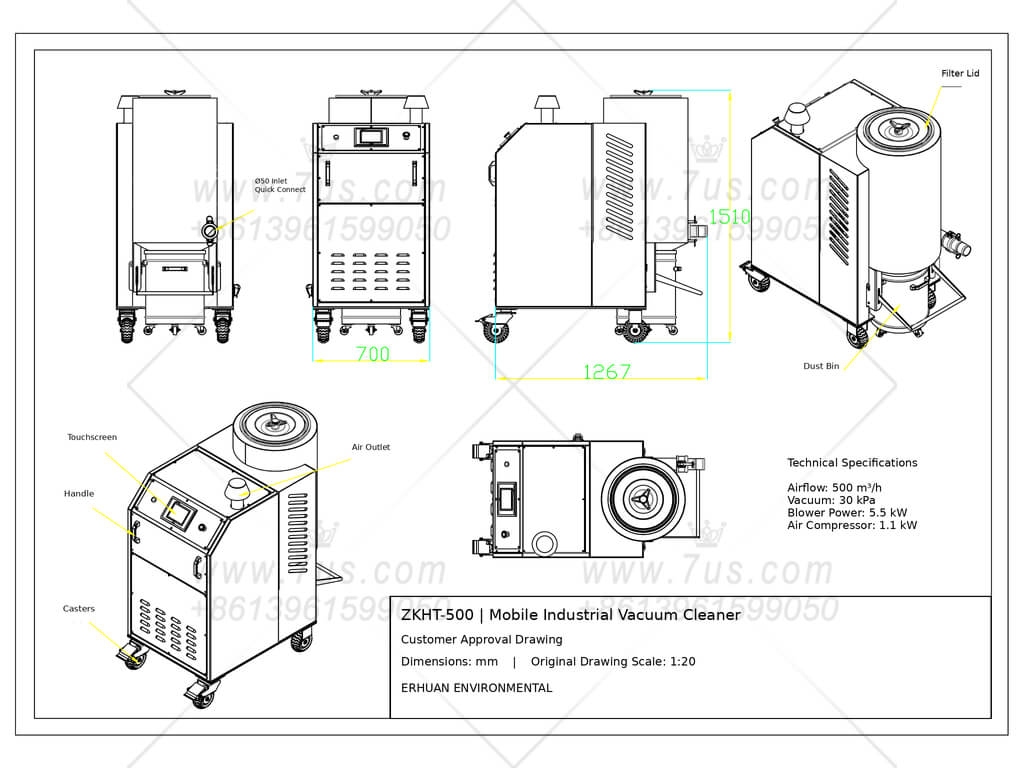 View drawing
Equipment Dimensions & Layout
Integrated Cleaning & Controls
- Built-in air compressor: supplies compressed air for filter cleaning without a separate plant-air connection.
- Touchscreen display: provides an accessible interface for operation and control.
- Automatic pulse-jet cleaning: uses compressed-air pulses to remove accumulated dust from the filter surface.
- Mobile construction: casters and a flexible hose allow the unit to move between cleaning locations.
- Power Connection & Cleaning Reach: three-phase power is connected through an industrial power connector. The working area is limited by the available power cable and suction hose lengths.
| Airflow | 500 m³/h |
|---|---|
| Vacuum | −30 kPa |
| Vacuum blower power | 5.5 kW |
| Built-in compressor power | 1.1 kW |
02
Central Vacuum Cleaning Systems
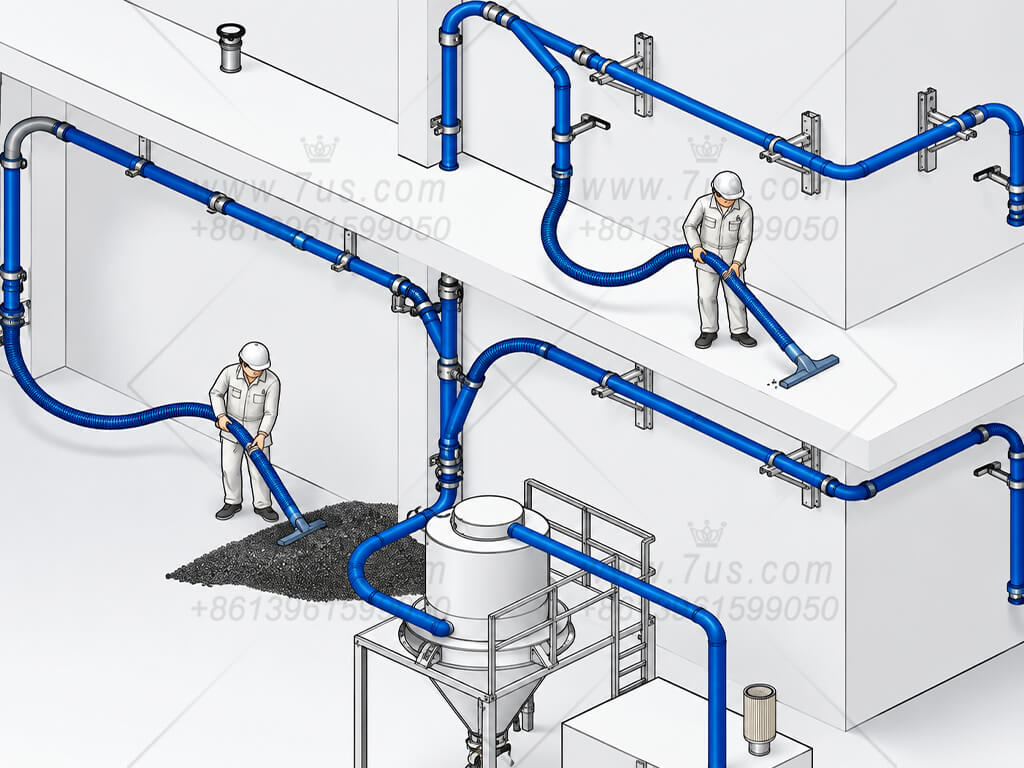
One central vacuum unit serves cleaning points throughout the workshop through a fixed pipe network. Connect a suction hose at the required inlet to collect settled dust and dry debris from floors and equipment.
 View system layout
Central Vacuum System Layout
Separation, Filtration & Vacuum Power
Cyclone Pre-Separation
A cyclone separates coarse particles and bulk material before the main filter, reducing the dust load on the filtration stage.
Cartridge or Flat Bag Filters
The main collector uses cartridge filters or flat filter bags, selected for the dust characteristics and cleaning requirements. Front-opening maintenance doors provide convenient access to the filters.
HEPA Final Filtration
A HEPA stage can be installed upstream of the vacuum blower to capture residual fine dust. This helps reduce impeller deposits and the resulting imbalance, protecting the blower, particularly an expensive multistage centrifugal blower.
Optional Inline Pre-Separator
Where liquid water or oversized debris may be collected, an additional pre-separator is installed between the suction hose and the main pipe. It intercepts large debris or separates liquid water before it enters the pipe network, helping prevent blockages.
Selected Vacuum Blowers
We manufacture the separation and filtration equipment and integrate purchased vacuum blowers. Blower selection matches the required airflow and vacuum; motor power follows the blower manufacturer's selection data.
Size for Simultaneous Use
Common airflow capacities are 1000 and 1500 m³/h; systems of 2000, 3000 m³/h or more can also be configured. Typical operating vacuum is −30 kPa, with −35 or −40 kPa available where stronger suction is required. At the same airflow, a greater vacuum magnitude generally requires more blower power. Higher-vacuum configurations are selected to suit the project and vacuum source.
Common suction hoses are DN40 or DN50. For initial sizing, we typically allow approximately 500 m³/h per DN50 cleaning hose in simultaneous use. Multiple vacuum inlets can be installed along the pipe network; size the system for the number used simultaneously.
| System airflow | Simultaneous users |
|---|---|
| 1000 m³/h | 2 |
| 1500 m³/h | 3 |
03
EHVC-C SERIES · EHVC-C56 SHOWN
Cartridge Filter Central Vacuum Systems
Front-access cartridge filtration with an integrated HEPA stage and double-valve airlock discharge for central vacuum cleaning.
Dust-laden air→Cyclone separator→Cartridge collector→HEPA filter→Vacuum blower→Exhaust
Click to enlargeCartridge Filter Configuration
Recommended Vacuum Blower
Our preferred choice for central vacuum cleaning systems is a multistage centrifugal blower. The case photo shows an economical side channel (regenerative) blower configuration. The selected blower is matched to the required airflow and operating vacuum.
Double-Valve Airlock Discharge
Two pneumatic discharge valves and an intermediate hopper transfer dust out of the collector while maintaining the vacuum seal, enabling online dust discharge.
Collector hopper → Valve A → Intermediate hopper → Valve B → Dust collection container
1 — A Open / B Closed
Dust enters the intermediate hopper while valve B seals the outlet.
2 — A Closed / B Open
Dust leaves the intermediate hopper while valve A isolates the collector.
The valves open alternately, maintaining an airlock during discharge and reducing air leakage into the vacuum system.
Filtration & Maintenance Details
EHVC-C56 — Four PTFE-Membrane Cartridges
The reference configuration uses four Ø324 × 1000 mm polyester cartridges with a PTFE membrane, providing approximately 14 m² per cartridge and 56 m² total filtration area.
Front Access & Quick Clamping
Open the front door, slide the vertical flange-mounted cartridges along the drawer-style guide rails, then rotate the eccentric clamping lever to secure them.
Vertical Cartridges & Pulse Cleaning
Vertical mounting allows dislodged dust to fall into the hopper during pulse-jet cleaning. Four Ø324 mm cartridges are used in the following reference configurations. The number after C identifies the nominal total filtration area in square metres.
| Model | Cartridge length | Filter area |
|---|---|---|
| EHVC-C40 | 660 mm | 40 m² |
| EHVC-C56 | 1000 mm | 56 m² |
| EHVC-C67 | 1200 mm | 67 m² |
| EHVC-C84 | 1500 mm | 84 m² |
Integrated H14 HEPA Stage
The upper HEPA housing and lower cartridge collector form one integrated assembly. The HEPA stage accommodates one 610 × 610 × 292 mm H14 filter.
Touchscreen, PLC & VFD Controls
The control cabinet combines a touchscreen, PLC and variable frequency drive (VFD), with real-time display of differential pressure, pulse-cleaning status and blower operating frequency.
04
EHVC-B SERIES
Flat Bag Filter Central Vacuum Systems
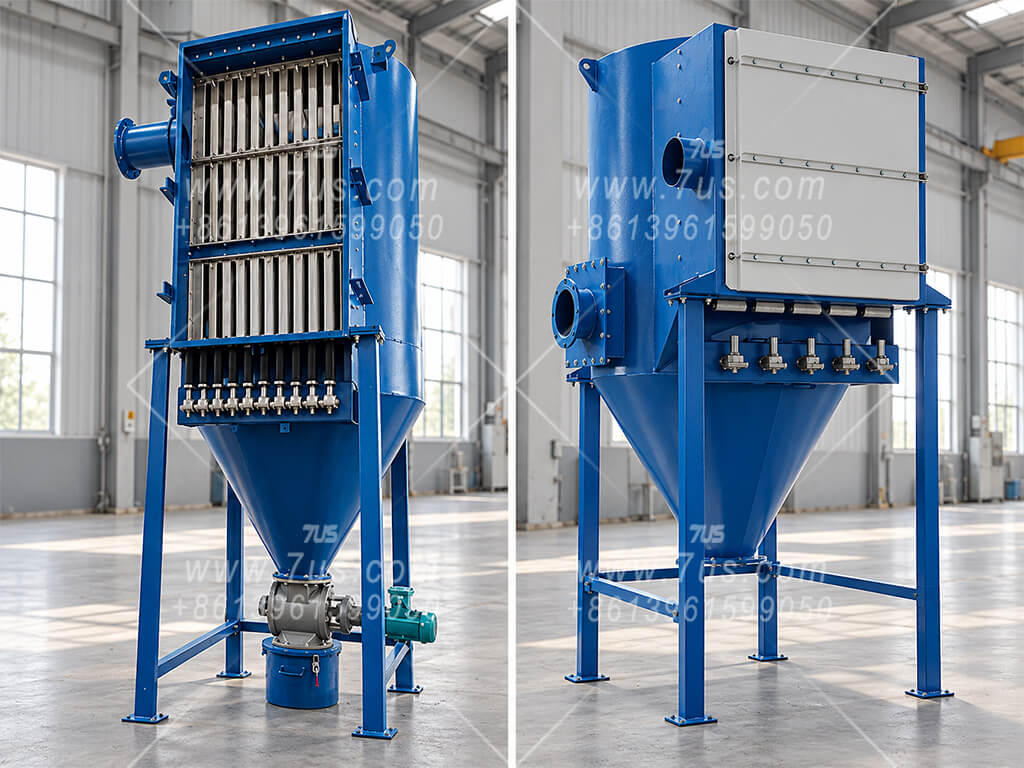
Front-access flat bag filtration with continuous rotary-valve dust discharge into a sealed collection drum. An integrated HEPA stage is available above the main collector.
Dust-laden air→Cyclone separator→Flat bag collector→Vacuum blower→Exhaust
 Click to enlarge
Internal Structure & Front Access
Open-door view of the flat bag filter central vacuum collector and its internal arrangement.
 Click to enlarge
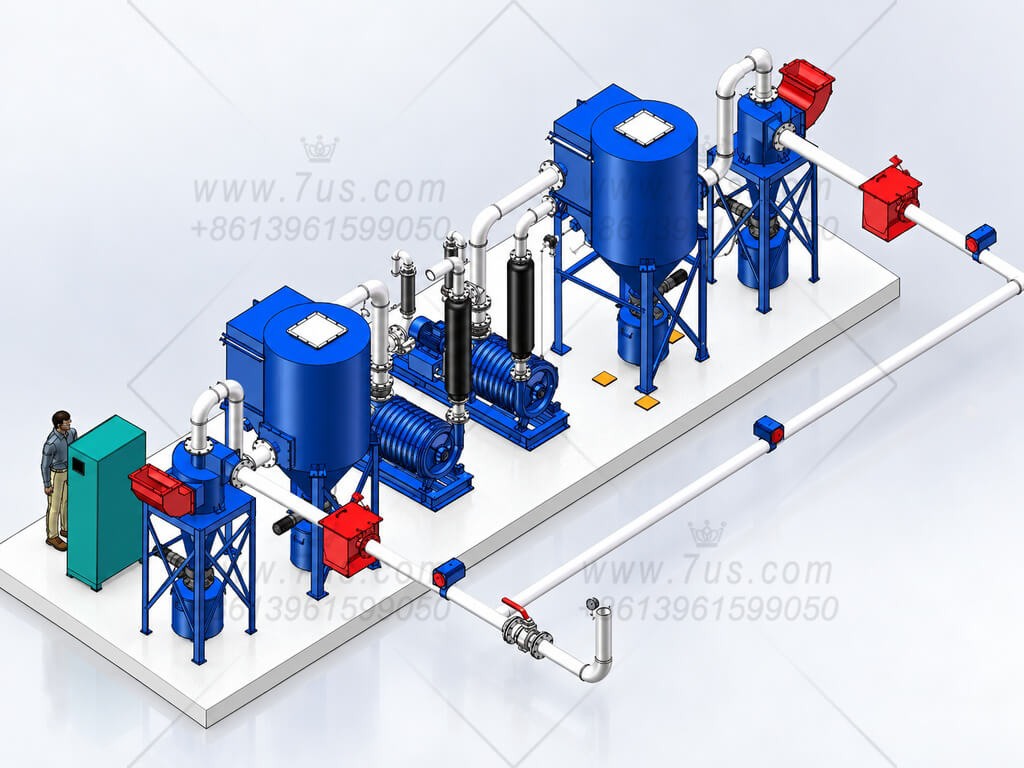
Central Vacuum System Layout
Plan view illustrating the arrangement of a flat bag central vacuum cleaning system.
 Click to enlarge
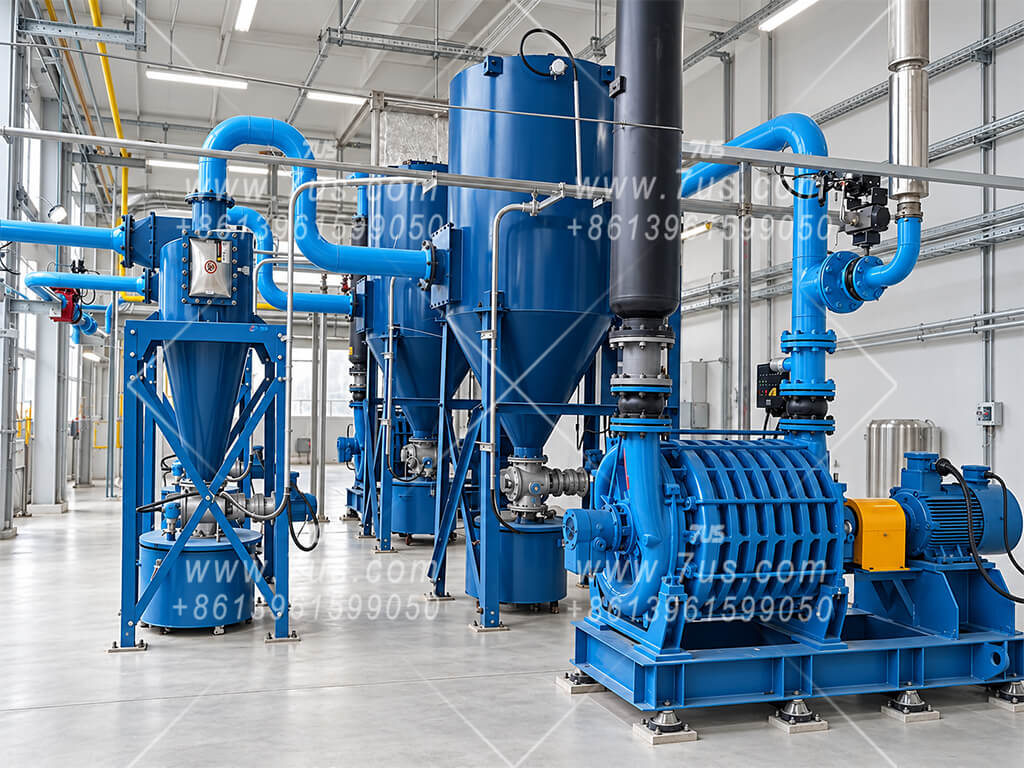
Installed System — View 1
Equipment photographed at the project site.
 Click to enlarge
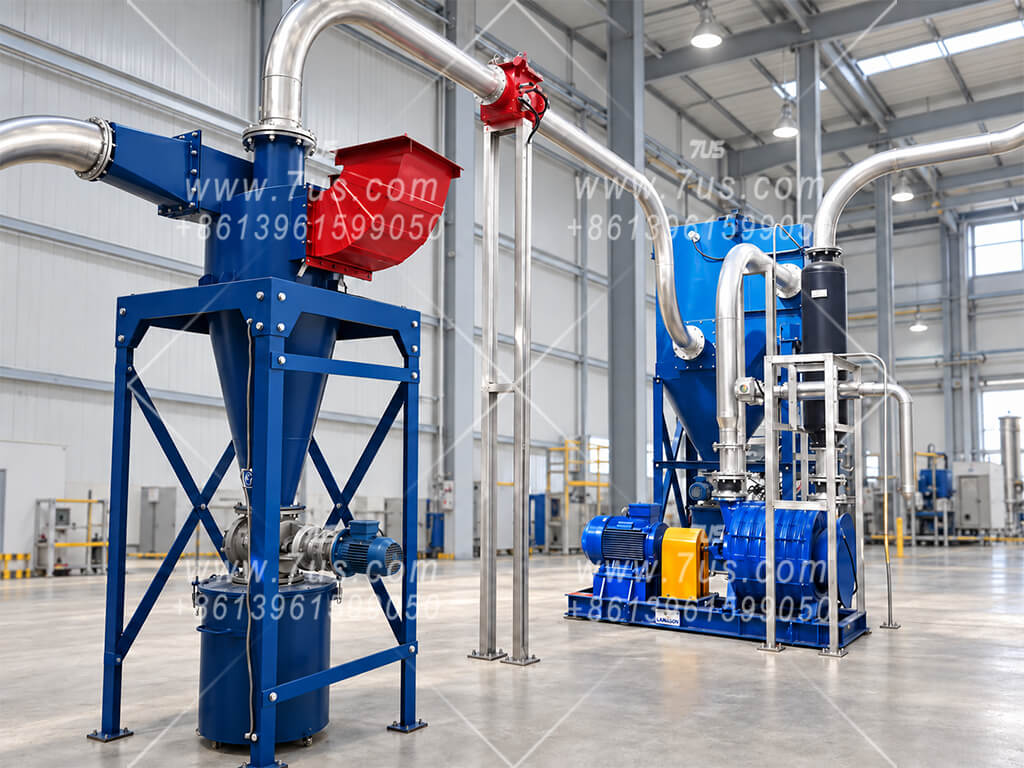
Installed System — View 2
Additional view of the equipment at the project site.
Flat Bags & Filtration Area
The front-opening door provides access to two or three tiers of flat filter bags. Each tier contains 10 polyester bags with a PTFE membrane. Typical bag dimensions are 500 × 1000 mm or 500 × 1500 mm.
| Model | Bag size (mm) | Tiers / bags | Filter area |
|---|---|---|---|
| EHVC-B20 | 500 × 1000 | 2 / 20 | 20 m² |
| EHVC-B30 | 500 × 1000 | 3 / 30 | 30 m² |
| EHVC-B30 | 500 × 1500 | 2 / 20 | 30 m² |
| EHVC-B45 | 500 × 1500 | 3 / 30 | 45 m² |
The number after B identifies the nominal total filtration area in square metres. EHVC-B30 is available with either three tiers of 1000 mm bags or two tiers of 1500 mm bags. Larger filtration-area configurations are also available.
Dust Discharge & Controls
Continuous Rotary-Valve Discharge
An electrically driven rotary discharge valve continuously transfers dust from the collector hopper into a sealed collection drum.
Collector hopper → Rotary discharge valve → Sealed collection drum
Touchscreen, PLC & VFD Controls
The control cabinet combines a touchscreen, PLC and variable frequency drive (VFD). Differential pressure, pulse-cleaning status and blower operating frequency are displayed in real time.
Optional Integrated HEPA Filtration
A HEPA filter housing can be integrated above the flat bag collector to form one assembly. When specified, the HEPA stage is installed between the main collector and the vacuum blower.
Automatic Make-Up Air & Blower Protection
An automatic vacuum relief (air-admission) valve admits make-up air when suction is restricted or fewer hoses are in use, limiting excessive vacuum and maintaining airflow to the blower.
05
Vacuum Cleaning Accessories
DN40 and DN50 cleaning kits and inlet valves connect suction hoses to the vacuum pipe network. Select the accessories to suit the cleaning task and connection size.
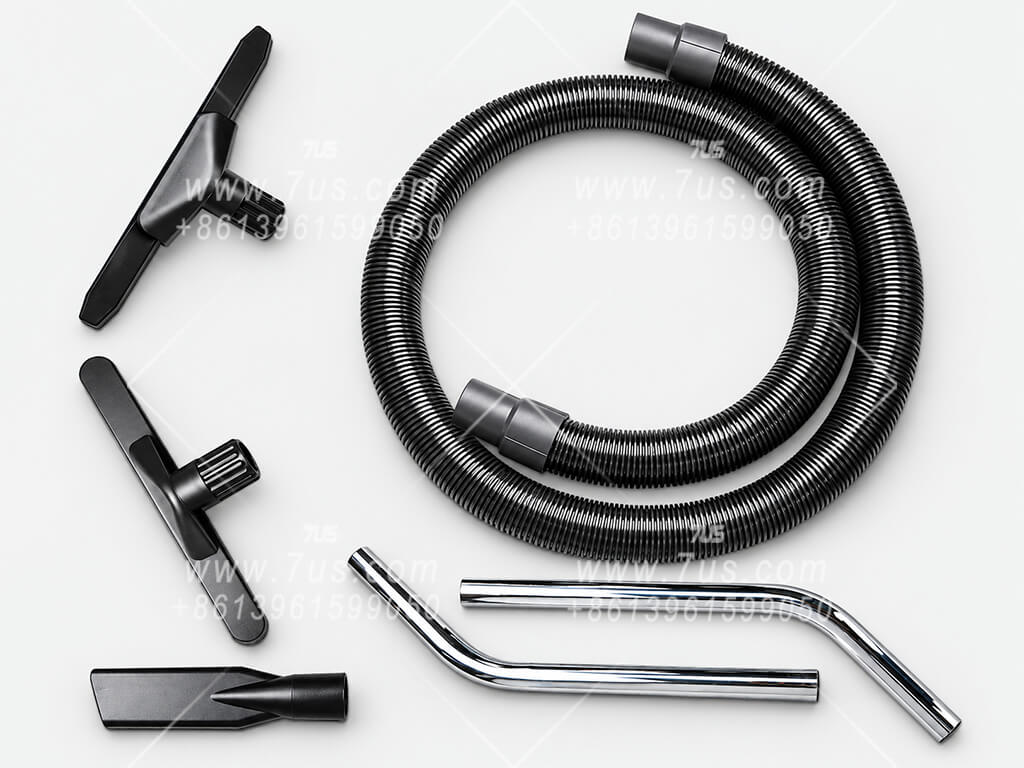 Click to enlarge
DN40 Plastic Nozzle Kit
A DN40 cleaning kit with plastic floor and crevice nozzles, a flexible suction hose and metal extension tubes for routine cleaning.
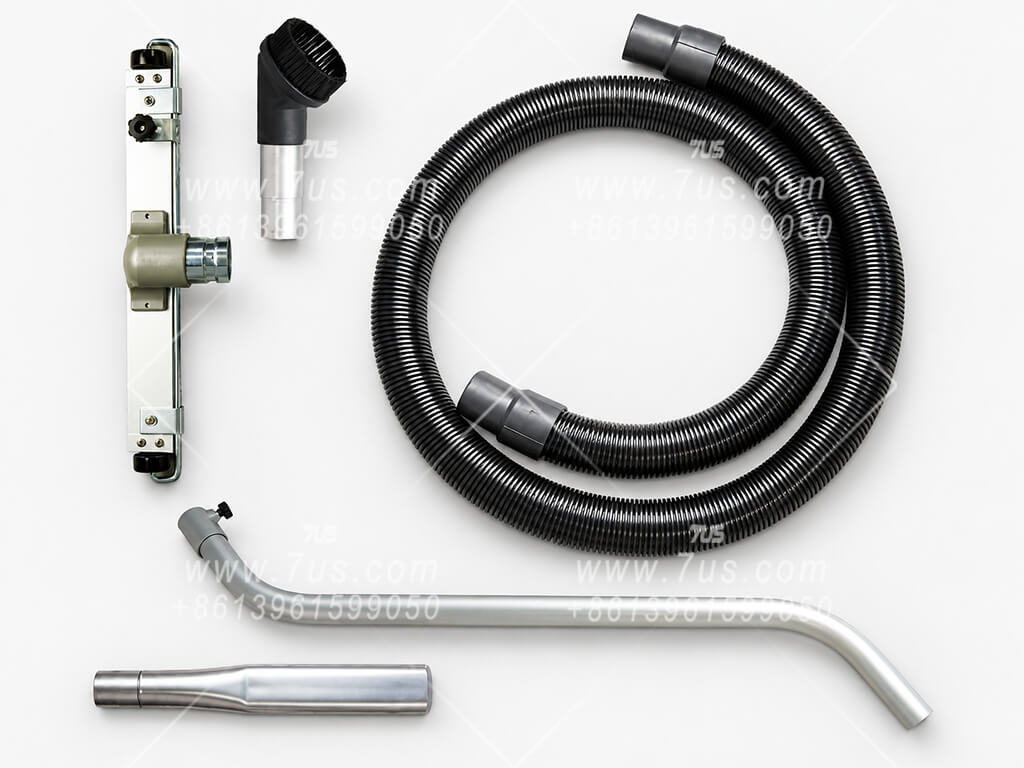 Click to enlarge
DN50 Stainless Steel Nozzle Kit
A DN50 cleaning kit with stainless steel floor and crevice nozzles, a brush nozzle and flexible suction hose for floors and equipment.
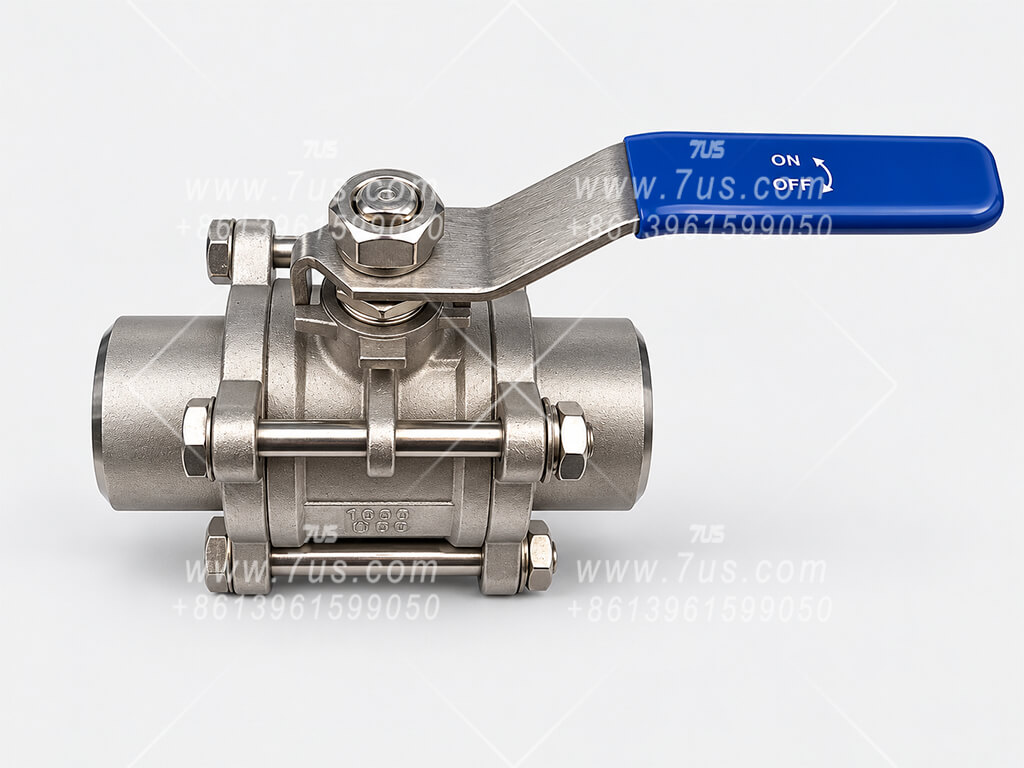 Click to enlarge
Stainless Steel Ball Valve
A manually operated ball valve for opening or isolating the suction hose connection on the vacuum pipe network.
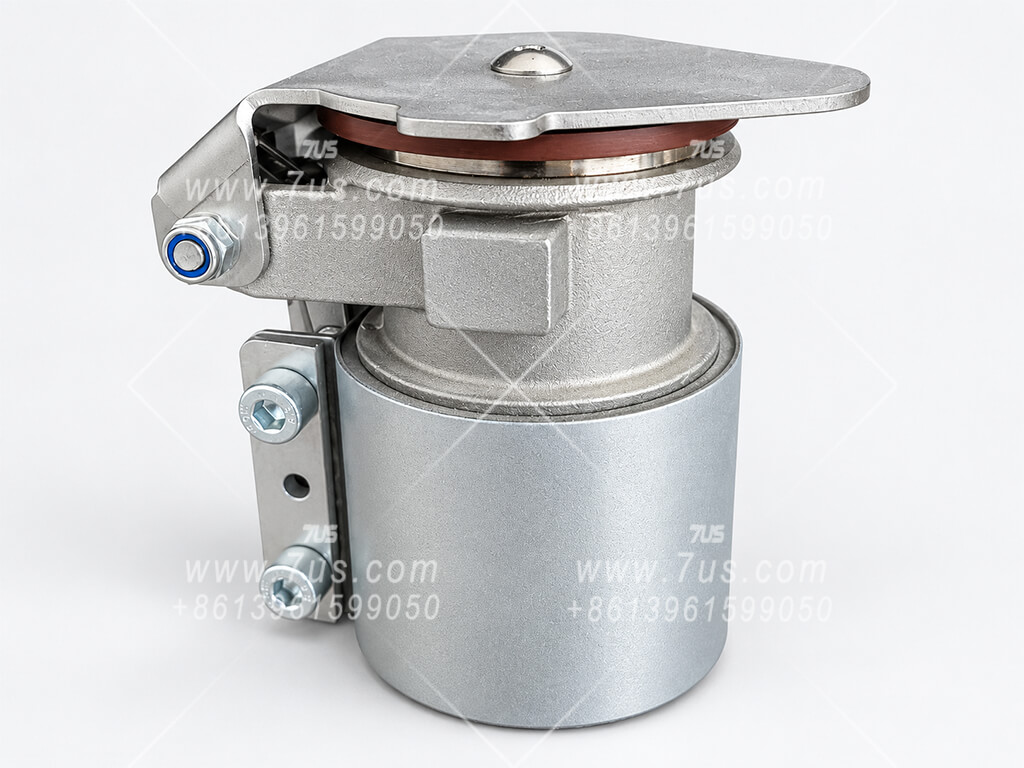 Click to enlarge
Stainless Steel Floor Inlet Valve
A floor inlet valve for connecting a cleaning hose to the vacuum pipe network. The hinged cover closes the inlet when not in use.
06
Industry Applications
Industrial vacuum cleaning collects settled dust and dry debris from floors, machinery and hard-to-reach areas. Typical cleaning applications include:
Tobacco Processing
Collect settled tobacco dust and small dry leaf fragments around processing equipment, conveyors and packaging lines.
Food & Grain Processing
Collect flour, starch, grain dust, husks and dry spills around mixers, conveyors, bucket elevators, silo loading points and packaging equipment.
Chemical & Powder Processing
Remove settled dry powders and granules from floors and equipment around bag tipping, mixing and packing areas.
Metalworking & Engineering
Collect settled grinding dust, dry metal particles and small chips from workstations, machinery and workshop floors.
Cement & Building Materials
Clean up cement and mineral dust, grit and dry spills around conveyors, transfer points and bagging areas.
Fiberglass & Composites
Remove settled fiberglass and composite dust and small dry fragments from production equipment, work areas and floors.
Shared Vacuum Supply & Cleaning
Where vacuum and airflow requirements match, one filtered central vacuum system can replace multiple dedicated pumps serving production equipment, then provide vacuum cleaning during production shutdowns.
Coal Handling & Conveying
Clean up settled coal dust and pulverized coal spills around conveyor belts, transfer points and conveying equipment.
Each application requires a suitable configuration. Filtration, construction materials, dust discharge and any special protection measures are selected according to the collected material and site requirements.
07
System Selection & Inquiry
Tell us what you need to collect and how the system will be used. A workshop layout and the following details help us select the filtration equipment and vacuum blower.
Vacuum Cleaning Requirements
- Collected material: dust type, particle size, approximate quantity and whether moisture is present.
- Cleaning points: number of hoses used simultaneously, hose diameter and hose length.
- Pipe layout: main pipe length, branches, vertical lift and distance to the farthest cleaning point.
- Site requirements: available power supply, operating hours, dust discharge method and any special material or protection requirements.
Shared Production Vacuum Supply
If the system will also supply vacuum to production equipment, please provide:
- Required operating vacuum at each connection.
- Airflow demand per machine and total simultaneous demand.
- Number of machines, operating cycle and existing vacuum pump specifications.
- Whether production vacuum supply and cleaning will operate separately or simultaneously.
The shared system is selected to match the production equipment's vacuum and airflow requirements.
Discuss Your Vacuum System
Send your requirements, workshop layout or existing equipment details.