
Why does dust remain on cartridge filters after pulse cleaning? Excessive dust loading, unsuitable filter media, moisture, insufficient compressed air, high filtration velocity and poor airflow distribution can all increase filter resistance. This guide explains common causes of cartridge dust buildup and how to troubleshoot them.
Dust accumulation on the surface of a cartridge dust collector is a normal part of filtration. During operation, particulate matter is captured on the outer surface of the filter media and periodically removed by pulse-jet compressed air cleaning.
However, when excessive dust remains on the cartridges after cleaning, differential pressure can increase and system airflow may decrease. The cause should be identified before simply replacing the filters.
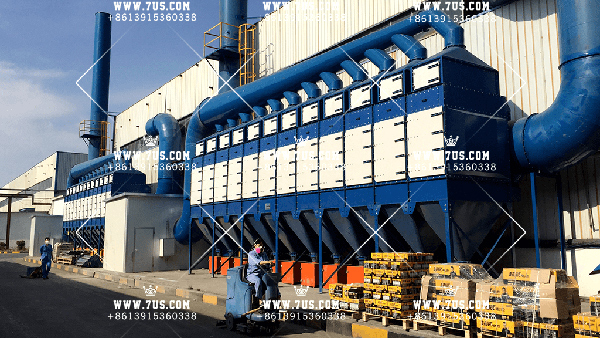
Why Does Dust Accumulate on Filter Cartridges?
Filter cartridges are designed to capture particulate matter, so a dust layer naturally develops during operation. Pulse cleaning removes accumulated material and helps maintain suitable filter resistance.
Problems occur when dust accumulates faster than the cleaning system can remove it or when the dust becomes difficult to release from the filter surface.
1. Excessive Dust Loading
High inlet dust concentration can cause particulate matter to accumulate rapidly on the filter cartridges. If the dust loading exceeds what the filtration area and cleaning system can effectively handle, differential pressure may increase.
In applications containing significant coarse particulate matter, suitable pre-separation may also be considered according to the process conditions.
2. Filtration Velocity Is Too High
When too much airflow passes through insufficient filter area, dust can be driven more strongly onto the filter surface and the cartridges may require more frequent cleaning.
The appropriate filtration velocity depends on dust characteristics, particle size, concentration, filter media and operating conditions.
Increasing airflow without providing sufficient filtration area can therefore contribute to high pressure drop and shorter filter life.
3. Insufficient Pulse Cleaning Pressure
Pulse-jet cleaning requires an adequate supply of clean and dry compressed air. If compressed air pressure is too low, accumulated dust may not release effectively from the cartridge surface.
For many industrial cartridge dust collectors, pulse cleaning typically requires approximately 4 bar or above depending on the equipment configuration.
Actual operating pressure should follow the specifications supplied for the particular dust collector.
4. Pulse Valves Are Not Operating Correctly
A damaged or incorrectly operating pulse valve can reduce the cleaning energy delivered to one or more filter cartridges.
When abnormal differential pressure develops, pulse valve operation, electrical connections, controller settings, compressed air supply and blow-pipe condition should be checked.
5. Moisture or Oil Makes the Dust Sticky
Standard dry cartridge filters can experience rapid pressure increase when dust contains significant moisture or oil. Sticky particulate matter can adhere to the filter surface and become difficult to remove by pulse cleaning.
Condensation can create similar problems when the gas temperature falls below the relevant dew point.
Applications involving significant moisture, oil mist or sticky dust should therefore be evaluated before conventional dry cartridge filtration is selected.
6. The Filter Media Is Not Suitable for the Dust
Different dust applications require different filter media. Polyester, PTFE-treated media, antistatic media, flame-retardant media and other specialized materials can provide different surface characteristics and operating capabilities.
Filter media should be selected according to dust characteristics, temperature, moisture, oil content and filtration requirements.
7. Poor Airflow Distribution
Internal airflow distribution can influence how dust reaches the filter cartridges. Uneven airflow may cause some filters to receive significantly higher dust loading than others.
Inlet configuration, cartridge arrangement, internal geometry and airflow velocity should therefore be considered as part of the complete collector design.
Does Vertical Cartridge Installation Help Dust Cleaning?
Vertical cartridge orientation can assist dust shedding because particulate matter released during pulse cleaning can move downward toward the hopper with gravity.
Horizontal and inclined cartridge dust collectors can also operate effectively when properly designed, but filter orientation can influence where released dust travels after cleaning.
Cartridge orientation alone does not determine performance. Airflow distribution, pulse cleaning, filter spacing and dust characteristics must also be considered.
What Does High Differential Pressure Mean?
Increasing differential pressure indicates increasing resistance through the filtration section. Normal dust loading causes some increase, but persistently high differential pressure can indicate excessive dust buildup, insufficient cleaning, moisture, unsuitable filters or other operating problems.
Differential pressure should therefore be evaluated together with airflow and equipment condition.
Should a Filter Cartridge Be Replaced When Pressure Drop Is High?
Not immediately. The cleaning system, compressed air pressure, pulse valves, dust characteristics, moisture conditions and airflow should first be checked.
If the cartridge remains excessively loaded after normal operating problems have been corrected, or if the filter media is damaged or permanently blinded, replacement may be required.
Can Dust Collector Filter Cartridges Be Washed?
Not every filter cartridge is washable. Water can damage some filter media, surface treatments, adhesives or cartridge components.
Washing should only be considered when the filter manufacturer specifically confirms that the cartridge construction and filter media are suitable for this cleaning method.
How Can Excessive Cartridge Dust Buildup Be Prevented?
Correct filtration area, suitable filter media, stable compressed air, properly operating pulse valves, appropriate airflow and control of moisture or oil can all help maintain normal filter resistance.
Monitoring differential pressure also allows operators to identify changes before filter loading becomes severe.
Looking for Cartridge Dust Collectors and Replacement Filters?
Jiangsu Erhuan Environmental Technology Co., Ltd. manufactures industrial dust collection equipment and filtration products under the 7US brand for international markets.
Our product range includes cartridge dust collectors, industrial filter cartridges, baghouse dust collectors, wet dust collectors and related filtration components.
We provide OEM and private-label manufacturing services for overseas distributors, engineering companies, system integrators and equipment manufacturers.
If you are troubleshooting an existing cartridge dust collector, useful information includes filter dimensions, filter media, differential pressure, required airflow, dust characteristics, operating temperature, moisture or oil conditions and photographs of the equipment.
View our industrial cartridge dust collectors and filtration products.
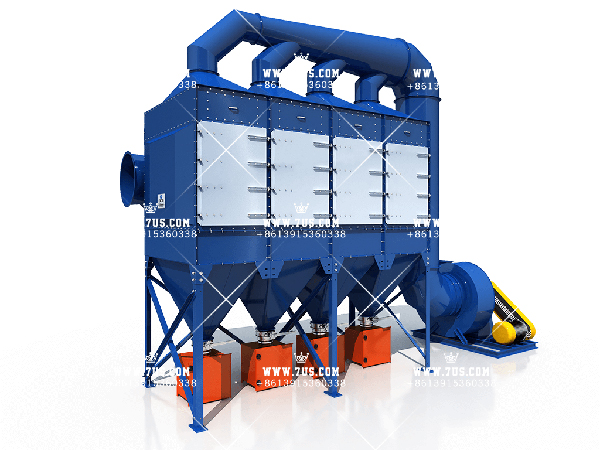
1. Vertical modular cartridge dust collector designed for high dust loading, fine dry dust and large-airflow industrial filtration applications. 2. Standardized DHC filtration modules can be combined to increase total airflow, allowing flexible system expansion according to project requirements. 3. Vertical cartridge arrangement with side-door access and eccentric cam fixing allows convenient filter inspection and replacement. 4. Single-stage cartridge filtration, two-stage cartridge + HEPA filtration, and three-stage cartridge + HEPA + activated carbon filtration configurations are available. 5. HEPA final filtration can be added for applications requiring very low particulate emissions, while activated carbon can be used as an additional polishing stage for suitable odor or VOC applications. 6. Standard single-module airflow ranges from 4,000 to 10,000 m³/h, and multiple DHC8 modules can be combined for systems up to 80,000 m³/h as shown on this page. 7. Equipment dimensions, filter media, color and OEM configuration can be customized according to project requirements.
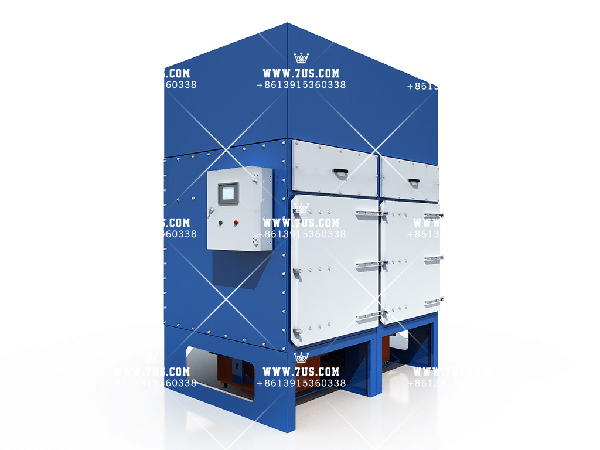
1. Vertical all-in-one cartridge dust collector designed for compact installation, convenient operation and efficient dry dust filtration. 2. Suitable for compatible dry dust and fume applications with dust-laden air temperatures below 120°C. 3. Vertical cartridge arrangement with side-door access allows convenient cartridge inspection and replacement. 4. Pleated cartridge filters provide a large filtration area within a compact equipment footprint, with automatic pulse-jet cleaning for routine filter cleaning. 5. Optional HEPA final filtration and activated carbon filtration can be added according to the required particulate and odor/VOC treatment needs. 6. DHC-YT series models are available with airflow capacities from 4,000 to 12,000 m³/h. 7. Equipment color, filter media, voltage, frequency and OEM configuration can be customized according to project requirements.
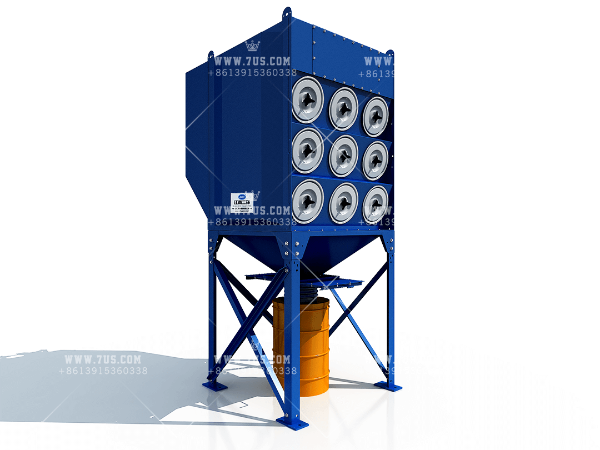
1. Downflow oblique modular cartridge dust collector designed for flexible capacity expansion through standardized modular units. 2. Compact modular construction helps reduce installation footprint and allows the equipment to be divided into transport-friendly sections for easier shipping and assembly. 3. Pleated cartridge filters provide a large filtration area within a compact equipment volume, with automatic pulse-jet cleaning for routine filter cleaning. 4. Standard EHDFT modules can be combined to increase total airflow according to project requirements, with configurations available up to 100,000 m³/h. 5. Optional two-stage filtration with cartridge filters and HEPA final filtration is available for applications requiring additional filtration performance. 6. Stainless steel construction, abrasion-resistant inlet arrangements, exhaust dampers and explosion protection components can be evaluated according to the application. 7. Suitable for compatible dry dust and fume applications without oil or water, subject to the confirmed dust characteristics and project safety requirements. 8. Equipment configuration, filter media, color a
No. 173, Wuwei Industrial Zone, Xushe Town, Yixing, Jiangsu, China© 1994-2026 7US.com. All rights reserved | Privacy PolicySite map
Phone