

Why does an oil mist collector lose efficiency or stop working properly? Common causes include clogged filters, incorrect airflow, poor maintenance, electrical problems, and improper installation. This guide explains common oil mist collector problems and practical troubleshooting steps for industrial applications.
An oil mist collector is designed to capture airborne oil mist generated by machining, CNC operations, metalworking, grinding, and other industrial processes using cutting fluids or lubricants. When an oil mist collection system loses airflow or filtration performance, identifying the cause quickly can help reduce downtime and restore normal operation.
Why Does an Oil Mist Collector Stop Working Properly?
Oil mist collector problems can result from filter loading, incorrect airflow, blocked ducts, electrical faults, poor drainage, improper installation, or insufficient maintenance. The correct troubleshooting method depends on the type of oil mist collector and the actual operating conditions.
1. Clogged or Saturated Filters
Filter loading is one of the common reasons for reduced oil mist collection performance. As oil and particulate matter accumulate on the filter media, airflow resistance can increase and the extraction performance may gradually decrease.
Filters should be inspected regularly and cleaned or replaced according to their condition and the equipment maintenance instructions.
2. Insufficient Airflow
An oil mist collector requires sufficient airflow to capture mist effectively at the source. Reduced airflow can be caused by clogged filters, blocked ducts, damaged hoses, incorrect fan operation, or an unsuitable equipment configuration.
If oil mist begins escaping around the machine enclosure or capture point, checking the airflow and pressure condition of the system is an important troubleshooting step.
3. Incorrect Equipment Selection
An oil mist collection system should be selected according to the required airflow, mist concentration, machining process, type of coolant or lubricant, operating conditions, and equipment connection requirements.
A collector that is too small for the required airflow or mist loading may not provide stable performance even when the equipment itself is operating normally.
4. Blocked Ducts or Flexible Hoses
Oil deposits and particulate matter can accumulate inside ducts, hoses, and connection points over time. Excessive bending, damaged hoses, or restricted duct sections can also reduce airflow.
Inspect the complete extraction path regularly and keep the airflow passage free from unnecessary restrictions.
5. Oil Drainage Problems
Oil mist captured by the filtration system may accumulate and drain from the collector depending on the equipment design. Blocked drains or excessive oil accumulation can affect normal operation and increase maintenance requirements.
Drainage components should therefore be inspected and cleaned as part of routine oil mist collector maintenance.
6. Fan or Electrical Problems
If the oil mist collector does not start, produces abnormal noise, vibrates excessively, or suddenly loses airflow, the fan, motor, electrical connections, control components, and power supply should be checked by qualified personnel.
Electrical maintenance should be performed according to the equipment instructions and applicable safety procedures.
7. Poor Installation or Incorrect Connections
Installation can have a significant effect on oil mist extraction performance. Incorrect duct connections, excessive duct resistance, unsuitable inlet positioning, air leakage, or improper equipment placement can reduce collection efficiency.
When troubleshooting a newly installed oil mist collector, the installation and airflow configuration should be checked before assuming that the filtration equipment itself is defective.
How Often Should an Oil Mist Collector Be Maintained?
There is no single maintenance interval suitable for every application. Inspection frequency depends on operating hours, mist concentration, machining process, coolant or lubricant characteristics, filter loading, and production conditions.
Regular inspection of filters, airflow, ducts, drainage components, fans, and electrical systems can help identify problems before they cause significant loss of performance.
Oil Mist Collector vs Oil Mist Separator: Are They the Same?
Terms such as oil mist collector, oil mist separator, oil mist filter, and oil mist extraction system are often used for equipment designed to remove airborne oil mist from industrial processes. However, different products may use different separation and filtration technologies.
When selecting equipment, buyers should compare the actual filtration method, airflow capacity, filter configuration, maintenance requirements, and suitability for the specific machining process rather than relying only on the product name.
Looking for an Industrial Oil Mist Collector?
Jiangsu Erhuan Environmental Technology Co., Ltd. manufactures industrial dust collection and filtration equipment under the 7US brand for international markets. Oil mist collection equipment is available for machining and other industrial applications, together with cartridge dust collectors, baghouse dust collectors, wet dust collectors, industrial filters, and related filtration components.
We provide OEM and private-label manufacturing services for overseas distributors, engineering companies, system integrators, and equipment manufacturers.
If you are sourcing an oil mist collector, provide the required airflow, machining process, mist characteristics, coolant or lubricant information, operating conditions, voltage and frequency, and installation requirements so that a suitable equipment configuration can be evaluated.
View our industrial oil mist collectors for machining and metalworking applications.
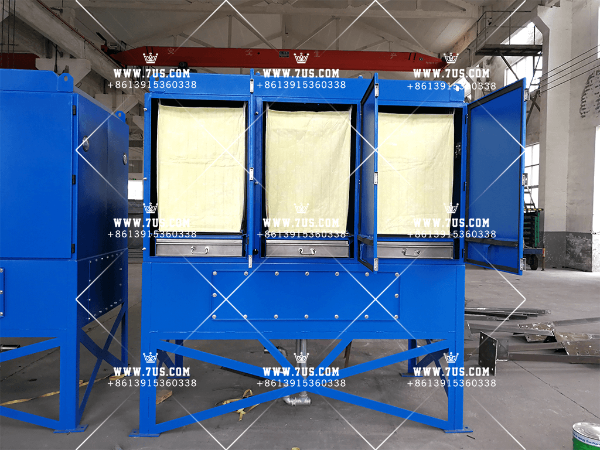
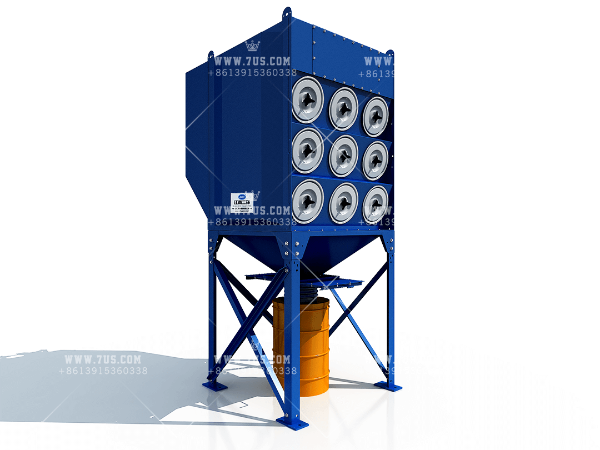
1. Vertical modular cartridge dust collector designed for high dust loading, fine dry dust and large-airflow industrial filtration applications. 2. Standardized DHC filtration modules can be combined to increase total airflow, allowing flexible system expansion according to project requirements. 3. Vertical cartridge arrangement with side-door access and eccentric cam fixing allows convenient filter inspection and replacement. 4. Single-stage cartridge filtration, two-stage cartridge + HEPA filtration, and three-stage cartridge + HEPA + activated carbon filtration configurations are available. 5. HEPA final filtration can be added for applications requiring very low particulate emissions, while activated carbon can be used as an additional polishing stage for suitable odor or VOC applications. 6. Standard single-module airflow ranges from 4,000 to 10,000 m³/h, and multiple DHC8 modules can be combined for systems up to 80,000 m³/h as shown on this page. 7. Equipment dimensions, filter media, color and OEM configuration can be customized according to project requirements.
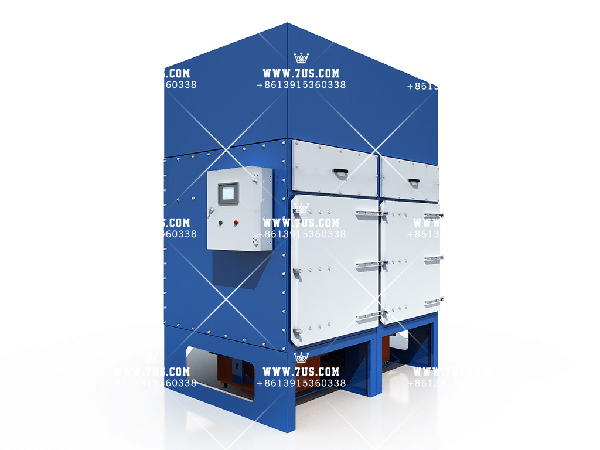
1. Vertical all-in-one cartridge dust collector designed for compact installation, convenient operation and efficient dry dust filtration. 2. Suitable for compatible dry dust and fume applications with dust-laden air temperatures below 120°C. 3. Vertical cartridge arrangement with side-door access allows convenient cartridge inspection and replacement. 4. Pleated cartridge filters provide a large filtration area within a compact equipment footprint, with automatic pulse-jet cleaning for routine filter cleaning. 5. Optional HEPA final filtration and activated carbon filtration can be added according to the required particulate and odor/VOC treatment needs. 6. DHC-YT series models are available with airflow capacities from 4,000 to 12,000 m³/h. 7. Equipment color, filter media, voltage, frequency and OEM configuration can be customized according to project requirements.
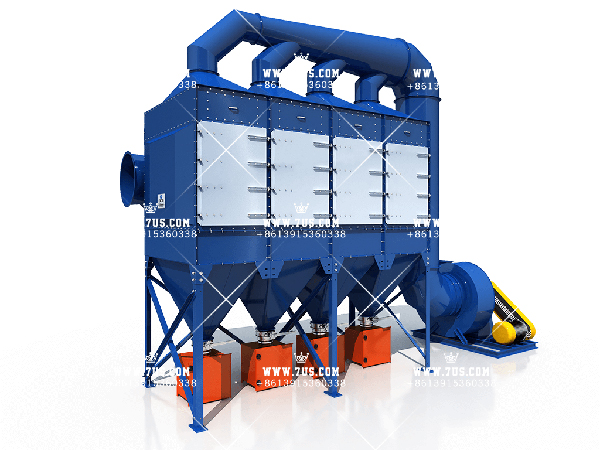
1. Downflow oblique modular cartridge dust collector designed for flexible capacity expansion through standardized modular units. 2. Compact modular construction helps reduce installation footprint and allows the equipment to be divided into transport-friendly sections for easier shipping and assembly. 3. Pleated cartridge filters provide a large filtration area within a compact equipment volume, with automatic pulse-jet cleaning for routine filter cleaning. 4. Standard EHDFT modules can be combined to increase total airflow according to project requirements, with configurations available up to 100,000 m³/h. 5. Optional two-stage filtration with cartridge filters and HEPA final filtration is available for applications requiring additional filtration performance. 6. Stainless steel construction, abrasion-resistant inlet arrangements, exhaust dampers and explosion protection components can be evaluated according to the application. 7. Suitable for compatible dry dust and fume applications without oil or water, subject to the confirmed dust characteristics and project safety requirements. 8. Equipment configuration, filter media, color a
Phone