
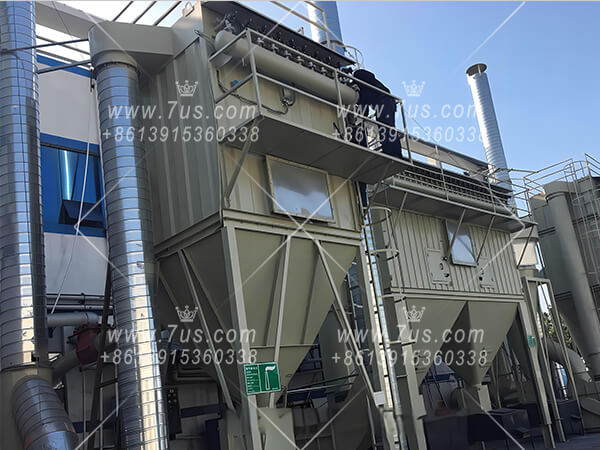
Explosion-Proof Baghouse Dust Collector 1. Product type: Baghouse dust collector configured with explosion protection components for industrial combustible dust applications. 2. Filter bags can be supplied with flame-retardant and antistatic materials, with conductive components bonded and grounded to help control static charge accumulation. 3. Explosion-proof motors, electrical control cabinets, pulse cleaning components and other safety-related configurations can be selected according to the application requirements. 4. Explosion relief, flameless venting, explosion isolation, spark detection and other protection measures can be configured according to the dust characteristics and risk assessment. 5. The final explosion protection configuration is selected according to the collected dust, operating conditions, installation environment and applicable compliance requirements.
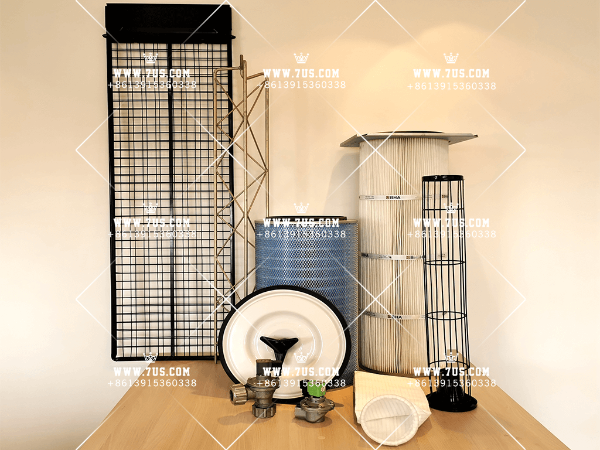
Dust Collector Parts & Accessories 1. Accessories are available for cartridge dust collectors, baghouse dust collectors and wet dust collection systems. 2. Filter cartridge media options include cellulose, nanofiber, polyester and PTFE membrane materials, with flame-retardant and antistatic configurations available for suitable applications. 3. Filter bag materials include polyester needle felt, PPS and P84 for different operating temperatures and process conditions. 4. Filter cages and support frames are available in galvanized steel, coated carbon steel and SUS304 stainless steel according to application requirements. 5. Other available components include cartridge covers, triangular handles, pulse solenoid valves, pulse controllers, HEPA filters, PP ventilation components and related dust collection accessories.
Food & Flour 1. Food and grain processing can generate coarse particles, fine dust, fibrous material, and dust containing oil or moisture. Dust collection equipment should be selected according to the actual material and process conditions. 2. In flour, noodle and other food processing applications, stainless steel such as SUS304 may be selected where hygiene, corrosion resistance or cleaning requirements make it appropriate. 3. For wheat, rice and other grain handling or storage applications, carbon steel dust collectors may be used where permitted by the process and hygiene requirements. 4. Wet dust collection may be considered for suitable oily, sticky or moisture-containing food dust applications, subject to the material properties and process requirements. 5. Baghouse dust collectors can be used for suitable dry food-processing applications such as flour, biscuit, grain and dried-fruit dust collection. 6. Some finely divided food and agricultural dusts, including flour, starch, sugar and certain grain dusts, can present combustible dust hazards when dispersed in air under appropriate conditions. 7. Grounding, bonding and any required explosion protection measures should be determined according to the specific dust properties, equipment configuration, installation location and applicable safety requirements.

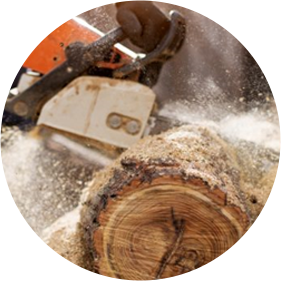
Wood, Paper & Furniture 1. Wood cutting, sanding, carving and furniture manufacturing can generate wood chips, coarse particles and fine airborne dust. 2. For small woodworking operations with limited dust generation, a compact dust collector can be selected according to the required airflow and dust characteristics. 3. For furniture factories with multiple woodworking machines, branch ducts can be connected to a main duct and a centralized dust collector can be used for dust extraction. 4. Fine wood dust can present a combustible dust hazard under certain conditions. Grounding, bonding and any required explosion protection measures should be determined according to the dust properties, system configuration, installation location and applicable safety requirements. 5. For coarse particles such as wood chips and shavings, a cyclone dust collector can be used for pre-separation or material recovery. Additional filtration may be required depending on the required emission level. 6. For applications containing both coarse particles and fine wood dust, a cyclone pre-separator can be combined with a cartridge or baghouse dust collector according to the process requirements.
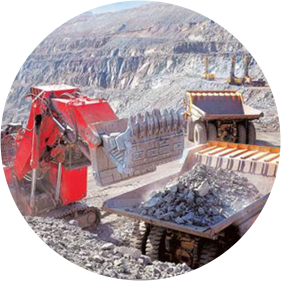
Mining & Minerals 1. Mining, ore crushing, conveying and mineral grinding processes can generate high concentrations of airborne dust and require effective dust collection at the points of generation. 2. Pulverized coal and certain other combustible mineral-related dusts can present fire and explosion hazards. Required explosion protection measures should be determined according to the actual dust properties, system configuration, installation location and applicable safety requirements. 3. For coal belt conveyor transfer points and other installations with limited space, compact flat bag dust collectors such as the DLMV series can be considered according to the required airflow and operating conditions. 4. For mineral powder grinding processes such as Raymond mills, a cyclone pre-separator combined with a baghouse dust collector can be used where suitable for the particle size distribution, dust concentration and process requirements. 5. For calcium carbonate and other high-volume mineral powder production lines, large baghouse dust collectors can be used for dust collection and product recovery according to the required airflow and filtration capacity. 6. In high-dust-load mineral processing applications, the collected powder may also be a valuable product. Dust collection systems can therefore serve both air pollution control and material recovery functions.
Improve baghouse dust collector performance by matching airflow, air-to-cloth ratio, filter bag media and pulse-jet cleaning to the actual dust conditions. Regular differential-pressure monitoring and preventive maintenance help maintain stable airflow, lower operating resistance and extend filter bag life.
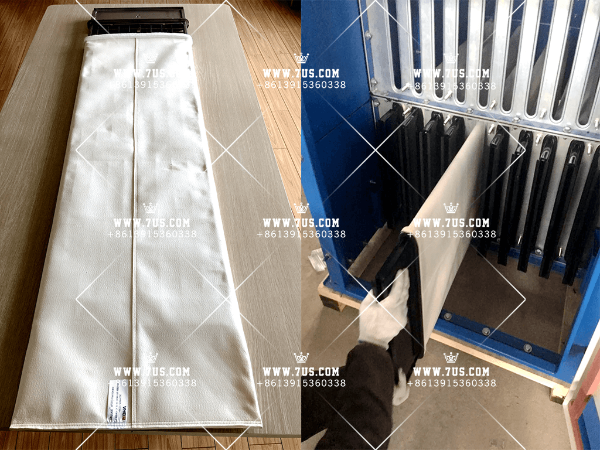
Choosing a reliable baghouse dust collector manufacturer requires more than comparing prices. Buyers should evaluate manufacturing capability, product quality, filter technology, customization options, technical support, and experience with industrial dust collection applications.
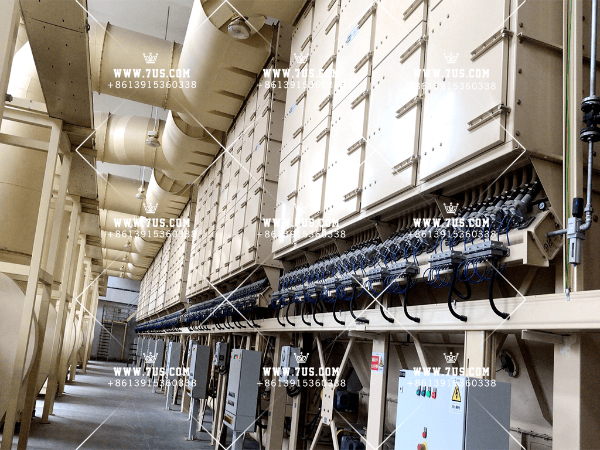
Different industrial processes require different dust collection technologies. Cartridge dust collectors, baghouse dust collectors, cyclone separators, and wet dust collectors each have their own characteristics and suitable applications depending on dust type, concentration, temperature, moisture, and operating conditions.
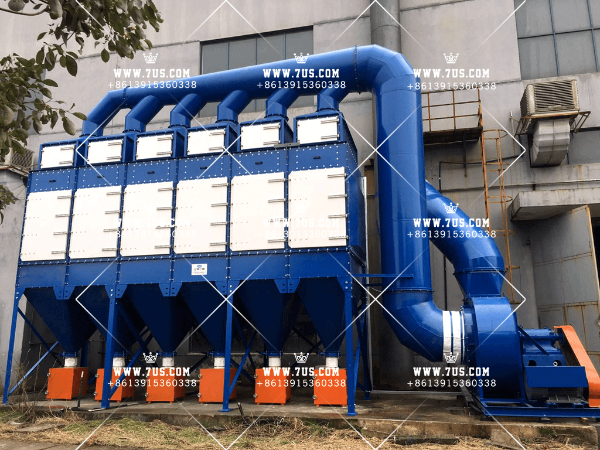
How do you choose the right baghouse dust collector for an industrial application? Airflow, dust characteristics, operating temperature, filter media, dust loading, and maintenance requirements can all affect equipment selection. This guide explains the key factors to consider before purchasing a baghouse dust collector.
Why choose 7US as your custom dust collector manufacturer? Jiangsu Erhuan Environmental Technology Co., Ltd. has manufactured industrial dust collection equipment since 1994, providing cartridge dust collectors, baghouse dust collectors, wet dust collectors, industrial filters, and OEM solutions for international customers.
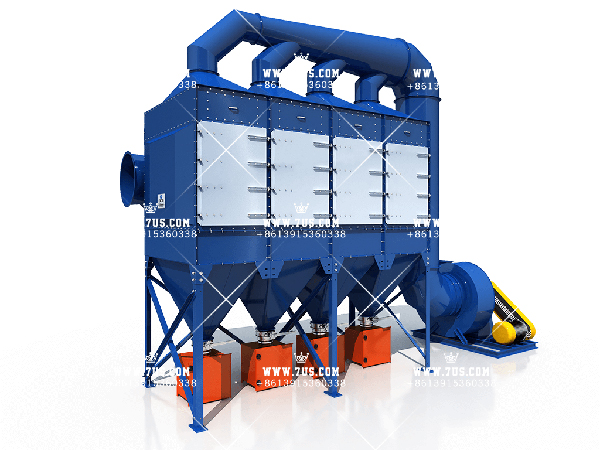
No. 173, Wuwei Industrial Zone, Xushe Town, Yixing, Jiangsu, China© 1994-2026 7US.com. All rights reserved | Privacy PolicySite map
Phone