
十二月 08, 2020
Mining and mineral processing can generate significant airborne dust during crushing, screening, conveying, loading, transfer and storage operations. Effective mining dust collection equipment helps control dust at individual collection points and supports cleaner operating conditions around the process.
The suitable dust collector should be selected according to the mineral type, particle size, dust concentration, material moisture, required airflow and operating conditions. Different process areas may require different dust collection configurations.
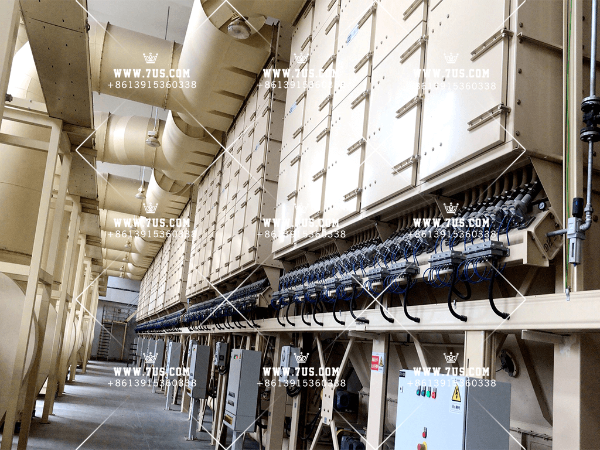
Dust can be generated at primary crushing, secondary crushing, screening, belt conveyors, transfer points, storage bins, truck loading stations and material-handling equipment. The collection approach should focus on the actual dust source and the airflow required at each location.
Coarse dust, fine mineral dust, hot material, sticky material and moisture-laden exhaust may require different filtration methods. A properly selected industrial dust collector helps maintain stable airflow and reduces dust accumulation in the surrounding work area.
1. Dust characteristics: Evaluate particle size, density, abrasiveness, moisture content, temperature and whether the dust may adhere to filter media.
2. Airflow requirement: Required airflow should be based on the collection point, hood arrangement, enclosure conditions and ductwork resistance. The dust collector and fan should be matched to the actual operating conditions.
3. Filtration method: Cartridge dust collectors, baghouse dust collectors, cyclones and wet dust collectors may be considered for different mining and mineral processing applications. Selection depends on the actual dust and process conditions.
4. Maintenance access: Filter replacement, pulse cleaning, hopper discharge and inspection access should be considered before selecting equipment for continuous mining operations.
Crushing and screening processes can create high dust loading and abrasive particles. The dust collector should have suitable filtration area, robust construction and a practical dust-discharge arrangement. For dry mineral dust, the filter media and cleaning system should be selected to maintain stable differential pressure during operation.
Where process air is hot, humid, oily, sticky or unsuitable for dry filter media, wet dust collection may be considered after evaluation of the material properties, wastewater handling and project requirements.
Regular maintenance helps maintain collection performance. Important inspection items include filter condition, differential pressure, cleaning system operation, compressed-air supply, hopper discharge, duct connections and air leakage.
7US supplies industrial dust collection equipment for mining and mineral processing applications. Provide your dust type, airflow requirement, process temperature and material-handling information for equipment selection.
 Products
 Industries
 OEM/ODM
 News
News About us
 Contact