
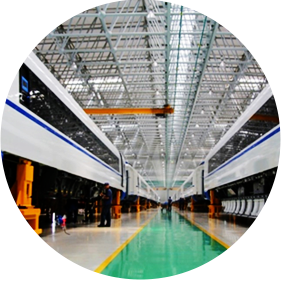
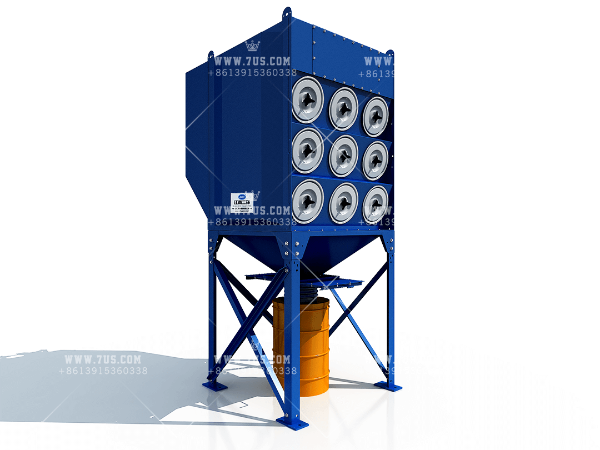
Train & Car Manufacturing 1. The manufacturing of high-speed rail vehicles, subway cars, automobiles and other transportation equipment can generate welding fume, grinding dust, coating powder and other airborne contaminants. 2. Robotic welding areas can use enclosed or partially enclosed welding fume collection systems, with extracted air conveyed through ductwork to a suitable dust or fume collector. 3. For multiple manual welding stations, movable extraction hoods or extraction arms can be connected to a centralized duct system for welding fume collection. 4. For a single manual welding station, a mobile welding fume purifier can be used where suitable for the process. 5. For multiple grinding stations, enclosed grinding areas or centralized dust collection systems can be used to capture and convey grinding dust to the collector. 6. For a single manual grinding station, a downdraft or grinding table can be selected according to the workpiece and dust characteristics. 7. For powder coating and powder spraying processes, cartridge dust collectors can be used for suitable dry powder recovery and dust filtration applications. 8. High-efficiency filtration and reduced particulate emissions are important trends in modern vehicle manufacturing dust collection systems. 9. Clean-air recirculation may be considered only when the contaminant type, filtration performance, process conditions and local regulations allow indoor air return.
How can a centralized welding fume dust collector handle a large automotive production workshop? This Great Wall Motors case study features a 100,000 m³/h industrial welding fume collection system supplied for centralized extraction and cartridge filtration in an automotive manufacturing plant.
No. 173, Wuwei Industrial Zone, Xushe Town, Yixing, Jiangsu, China© 1994-2026 7US.com. All rights reserved | Privacy PolicySite map
Phone