
十二月 08, 2020
Selecting the right industrial dust collector is important for maintaining a clean, safe, and efficient production environment. Different industrial processes generate different types of dust, so the dust collection equipment should be selected according to the dust characteristics, airflow requirements, operating conditions, and filtration needs.
1. Understand the Dust Characteristics
The first step is to understand the dust generated by the production process. Important factors include particle size, dust concentration, temperature, moisture or oil content, and whether the dust is combustible. Different dust characteristics may require different collector structures and filter media.
2. Determine the Required Airflow
Airflow is one of the key parameters when selecting a dust collector. The required airflow depends on the production process, dust generation points, capture method, and operating conditions. Proper airflow helps capture dust effectively while avoiding unnecessary energy consumption.
3. Select the Appropriate Dust Collection Technology
Different applications require different filtration technologies. Cartridge dust collectors are commonly used for fine, dry dust and applications requiring compact equipment. Baghouse dust collectors are suitable for many applications with higher dust loading. Wet dust collectors can be considered for certain applications involving combustible metal dust, oily particles, or other dust conditions where wet collection is more appropriate.
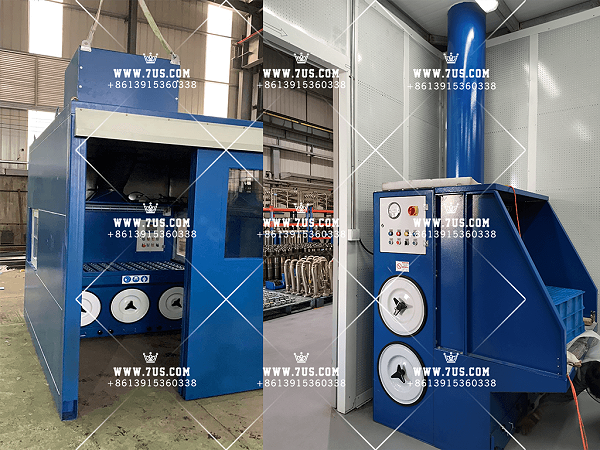
A vertical cartridge dust collector can provide a compact filtration solution for many dry industrial dust collection applications.
4. Consider Filter Cleaning and Maintenance
Filter cleaning performance directly affects the operating resistance and service life of a dust collector. Pulse-jet cleaning is commonly used in industrial cartridge and baghouse dust collectors. Equipment should also provide convenient access for filter inspection and replacement.
5. Consider Safety and Operating Conditions
The operating environment should be evaluated before equipment selection. Dust temperature, moisture, installation location, electrical requirements, and potential combustible dust hazards may influence the final equipment configuration. Where combustible dust is involved, the applicable safety requirements should be evaluated according to the specific application and local regulations.
6. Evaluate Long-Term Operating Costs
Dust collector selection should not be based only on the initial equipment price. Filter replacement, compressed air consumption, pressure drop, energy consumption, maintenance access, and equipment reliability can all affect long-term operating costs.
Choosing the Right Dust Collector Manufacturer
Working with an experienced industrial dust collector manufacturer can help equipment manufacturers, distributors, and engineering companies select suitable equipment for different applications. Clear information about airflow, dust characteristics, temperature, operating conditions, and electrical requirements can help determine an appropriate equipment configuration.
Jiangsu Erhuan Environmental Technology Co., Ltd. manufactures industrial dust collection equipment and filtration products under the 7US brand for international markets. Our product range includes cartridge dust collectors, baghouse dust collectors, wet dust collectors, industrial filter cartridges, and related filtration components. OEM and private-label manufacturing services are also available for overseas partners.
 Products
 Industries
 OEM/ODM
 News
News About us
 Contact