Wet Dust Collectors for Aluminum & Magnesium Dust
Aluminum and magnesium dust is combustible — and it generates hydrogen in water. This guide explains how a wet collector handles both: wet capture at the source, a fail-open hydrogen vent for shutdown hours, and the flat-bottom scraper design these metals need.
The short answer
Aluminum and magnesium dusts are combustible — and they add a second hazard most dusts do not have: in contact with water, the fine metal slowly generates hydrogen gas. Wet dust collectors are the usual first choice for grinding and polishing aluminum and magnesium parts, because the dust is captured into water at the source: there is no dry filter cake to ignite, and sparks are quenched on contact. But a wet collector for these metals must also manage the hydrogen — while it runs, and just as importantly, while it is stopped. On 7US EHWD wet collectors, a motor-driven vent valve on top of the unit handles the stopped case: it is closed under power and fails open when power is lost.
Why aluminum and magnesium dust is different
Three properties drive the selection. First, fine dry aluminum and magnesium dust is combustible and can deflagrate if it accumulates and finds an ignition source. Second, the dust is usually produced by grinding, polishing or cutting — processes that generate sparks right where the dust is made. Third, the metal reacts with water and releases hydrogen, so the collection method that solves the fire problem (water) creates a gas-management problem that must be engineered, not ignored.
How the hydrogen is handled
In the EHWD scrubber, dust-laden air is drawn through the water bath and the captured metal particles settle into the tank, where the slow reaction with water releases hydrogen as fine bubbles. The bubbles break at the water surface, and the hydrogen rises along the unit's internal guide structure to the top of the machine.
While the collector is running, the fan continuously sweeps the hydrogen out through the exhaust stack, so it never accumulates inside the unit. When the machine stops, the reaction in the tank continues. The top-mounted hydrogen vent valve then opens: it is motor-driven, closed while powered, and fails open on power loss. The valve bypasses the fan and connects directly to the stack above the fan outlet, so residual hydrogen vents passively from the highest point of the unit — including during a complete power outage.
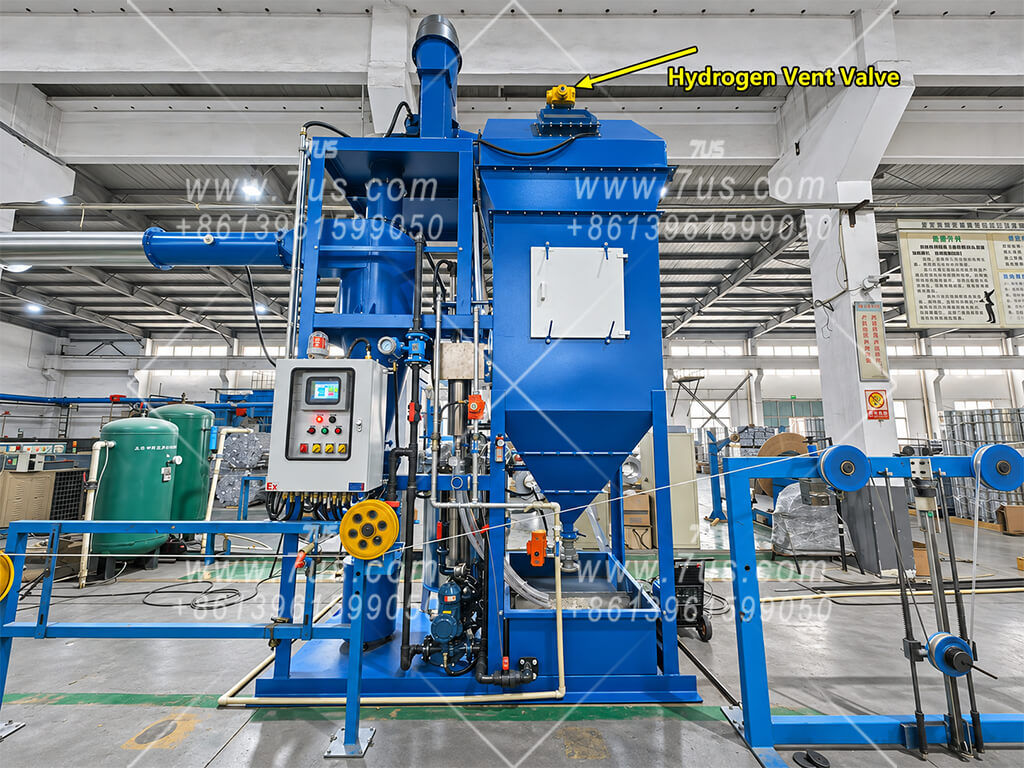
This is the detail to check on any wet collector offered for aluminum or magnesium service: ask what happens to the hydrogen after shutdown, not only during operation. The EHWD high-airflow range describes the venting arrangement in its aluminium and magnesium application section.
How the sludge is handled — and why the C type suits aluminum and magnesium
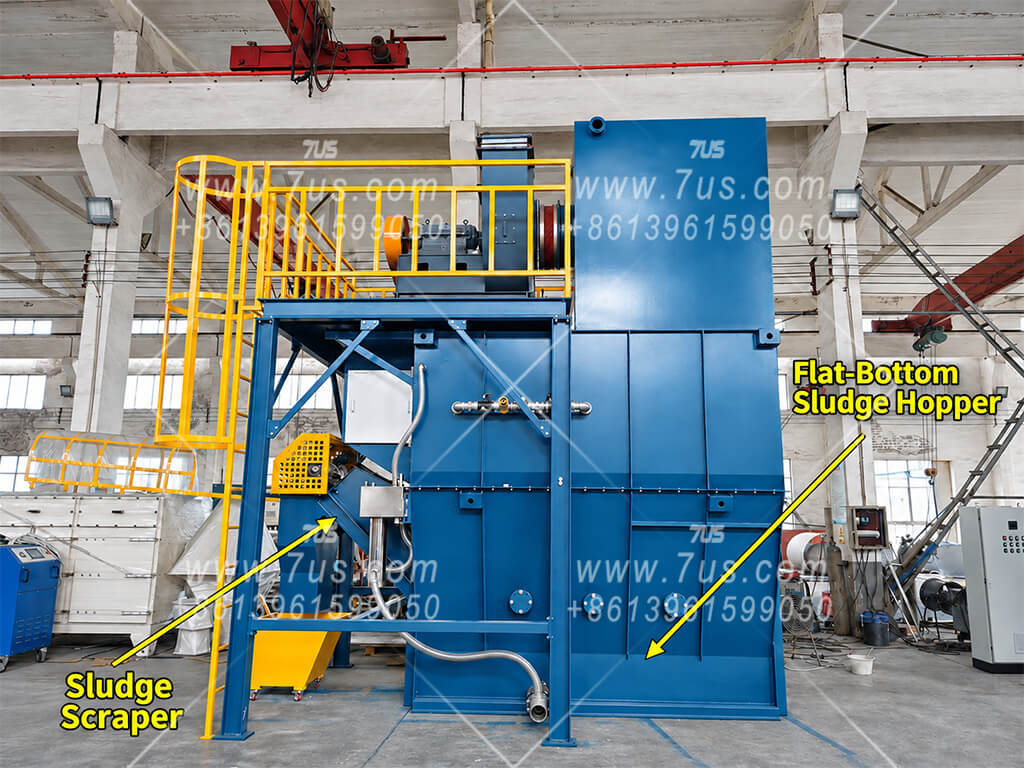
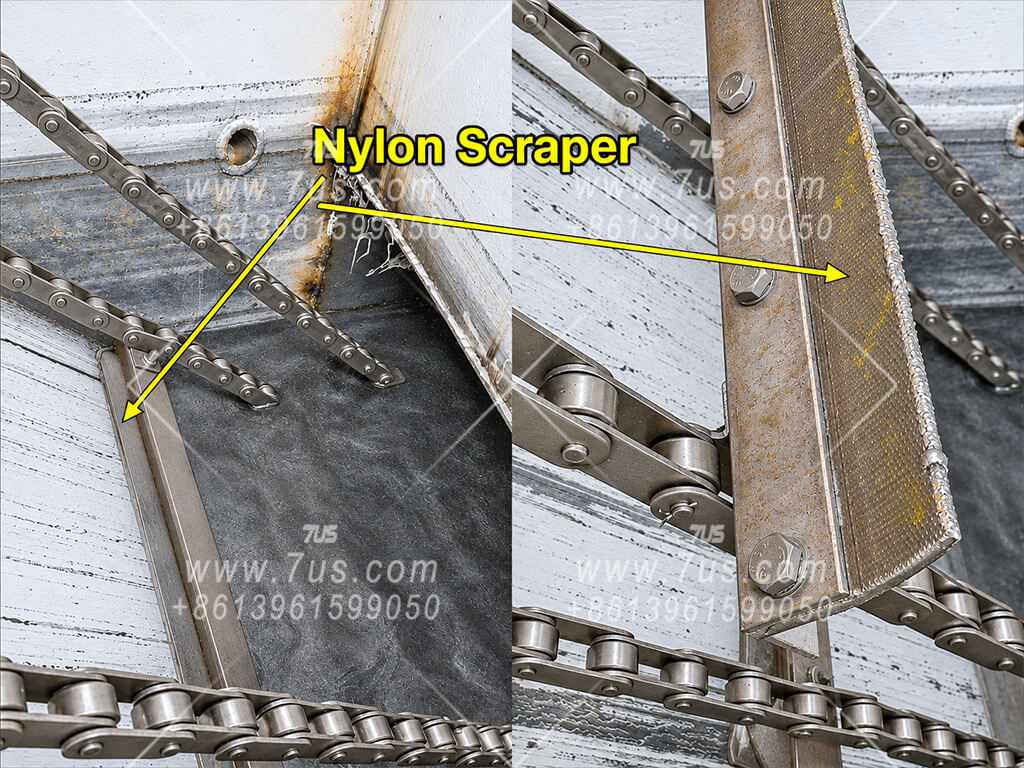
Reacted aluminum and magnesium sludge swells as it reacts, and it blocks narrow outlets. That is why aluminum and magnesium service uses the EHWD-C design: a flat-bottom sludge tank with a chain scraper inside (chain, scraper blades and drive shaft; every part below the waterline is 304 stainless steel). The scraper blades carry nylon wear strips at their tips, so nylon — not metal — touches the tank floor; the strips are consumables, checked by eye and replaced when worn. The scraper discharges a wet sludge-water mixture into a collection box — there is no dry residue. The conical-hopper flushing design (EHWD-D) is better suited to mineral powders and non-metal dusts, where the sludge does not swell; on small compact units with little dust, the tank is simply cleaned out by hand.
| EHWD-C — flat-bottom scraper | EHWD-D — conical hopper | |
|---|---|---|
| Sludge tank | Flat-bottom tank | Conical hopper |
| Sludge removal | A chain scraper rakes the sludge continuously to the outlet; it is discharged as a sludge-water mixture into a collection box | Flushing discharge from the cone |
| Suited to | Dusts whose reacted sludge swells or sets — aluminium and magnesium alloy dust is the standard case | Mineral powder processes and non-metal dusts whose sludge does not swell |
| In-tank wear parts | Scraper blades carry nylon wear strips (all submerged parts are 304 stainless steel); the strips are consumables, replaced on visual inspection | No scraper mechanism in the tank |
Limits and responsibilities
A wet collector is an explosion-mitigation strategy, not a certified explosion-proof machine: 7US dust collectors carry no whole-unit ATEX or Ex certification. Final system design rests on the buyer's dust hazard analysis — for combustible metals, NFPA 660 (which consolidates the former NFPA 484) and local codes — using your actual dust data. Wet collection produces a wet sludge, not dry waste; plan its disposal under your local rules. See also our page on dust collectors for combustible dust.
What to send us for a selection
Alloy and process (aluminum, magnesium or Al-Mg alloy; grinding, polishing, cutting or deburring) · required airflow or your hood layout · approximate dust loading · operating hours per day (this affects tank reaction and venting) · any site rules on sludge disposal. We will size the scrubber and confirm the venting arrangement against your data.
Frequently asked questions
Why not a dry cartridge collector for aluminum dust?
Dry collection concentrates combustible dust on filter media, close to a spark-producing process. It can be engineered with spark arrestors, anti-static media and explosion venting, but for aluminum and magnesium the wet route removes the fuel-and-ignition combination at the source and is normally the safer starting point.
Does the hydrogen vent work during a power outage?
Yes. The vent valve is fail-open: it needs power to stay closed, so any power loss — shutdown or outage — opens the bypass to the stack and the hydrogen generated in the tank vents from the top of the unit.
What happens to the collected dust?
On the EHWD-C it is scraped out continuously: the chain scraper in the flat-bottom tank pushes the sludge-water mixture into a collection box. Wetted scraper parts are 304 stainless steel, and the nylon wear strips on the blade tips are consumables, replaced when visual inspection shows wear. Small compact units are cleaned out by hand. Disposal follows the buyer's local environmental rules.
Is the wet collector ATEX certified?
No. The collector is a standard industrial unit without whole-unit explosion-proof certification. The protection concept for aluminum and magnesium service is wet capture plus engineered hydrogen venting, confirmed against the buyer's dust hazard analysis.
Send us your process data
Dust type, airflow and site conditions — we will size the unit and reply with a scoped quotation.